
Chimney and roofline defects on a well-kept Bramhall bungalow: a Level 2 survey in Stockport
At first glance, this detached bungalow in Bramhall appeared to be a well-kept and straightforward purchase. However, our RICS Level 2 Home Survey showed why even tidy-looking homes can conceal costly issues beneath the surface.
The property
The property was a detached three-bedroom bungalow, understood to date from the late 1960s to mid-1970s, located in a mature and desirable residential setting. Homes of this era can often provide generous room sizes, practical layouts and substantial plots, which makes them attractive to a broad range of buyers, including downsizers, couples and small families.
This particular property benefitted from off-road parking, an attached garage and surrounding gardens, all of which added to its appeal. From a visual perspective, it presented as a relatively straightforward home purchase. It had clearly been occupied and maintained over time, and there was little to immediately suggest the scale of repair concerns that were later identified during the inspection.
As with many homes of this age, however, the real condition of the property could only be properly understood through a close inspection of the roof coverings, rainwater goods, external joinery, structural features and internal signs of moisture or deterioration. This is often where a survey becomes particularly valuable — especially for buyers who may otherwise rely too heavily on appearance alone.
Survey summary
Our overall assessment was that the bungalow was not without merit and could still represent a reasonable purchase. However, it was equally clear that the buyer needed to proceed with a realistic understanding of the repair work and maintenance costs involved.
The survey did not identify issues that necessarily made the property unsuitable to buy, but it did highlight several areas that would likely require urgent or near-term attention. In practical terms, this meant the buyer was in a much stronger position to review the likely cost implications, seek specialist quotations where necessary, and consider whether the agreed purchase price still reflected the property’s true condition.
This is one of the key benefits of a Level 2 Survey: not simply identifying defects, but helping buyers make informed decisions based on evidence rather than assumption.
Key survey findings
Chimney Stack Defects
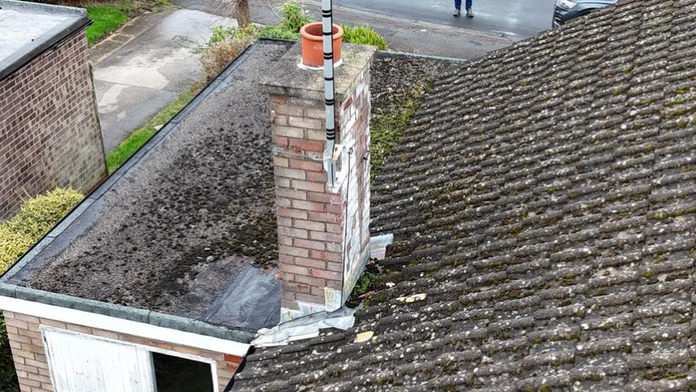
One of the more significant concerns identified during the inspection related to the chimney stacks. Although chimney defects are often overlooked by buyers — particularly where fireplaces are no longer in active use — they can present a serious maintenance issue if not addressed.
Chimney stack defects
In this case, the chimney stacks showed signs of deterioration including defective pointing, weathered brickwork and concerns around the flashings. These types of defects can allow rainwater to penetrate into the structure over time, leading to dampness internally and more extensive repair requirements if left unresolved.
Internal evidence also suggested that moisture ingress may already have been affecting adjoining areas. For the buyer, this was particularly important because chimney repairs often require scaffold access and can become significantly more expensive if deterioration is allowed to continue.
Roof Covering and Roofline Issues
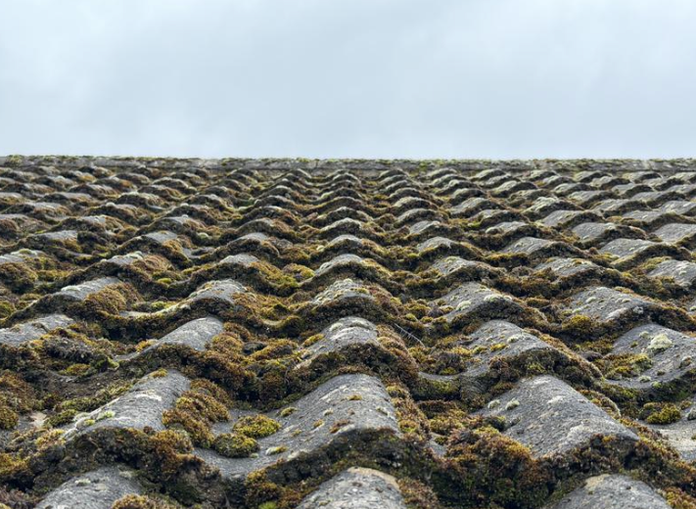
The survey also highlighted concerns with the main roof. While the roof remained serviceable overall, it was showing signs of age-related wear and a lack of ongoing maintenance. Defects included slipped or displaced tiles, deterioration to mortar at the verges and general weathering consistent with an ageing roof covering.
Moss on roof
Moss growth was also noted, which in itself is not always severe, but can contribute to blocked gutters, moisture retention and accelerated wear if left unmanaged. This was reinforced by issues identified with the rainwater goods, where vegetation build-up and likely leakage were also observed.
These findings matter because roof defects often begin as manageable maintenance items but can quickly develop into more disruptive and costly repairs if ignored. A buyer seeing the property only from ground level may not have appreciated the extent of these concerns without the survey.
Porch Deterioration
Another notable issue involved the front porch structure. While porches can sometimes seem like relatively minor additions, defects here can still create broader maintenance and damp-related problems.
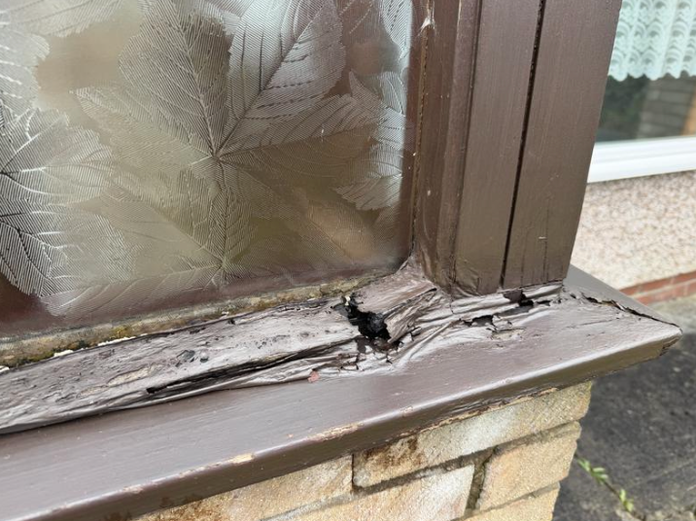
In this case, the porch showed clear signs of deterioration, including timber decay and weathering to its roof covering and associated components. There were also concerns around how rainwater was being discharged, increasing the likelihood of moisture affecting the surrounding structure.
Timber decay on porch
This type of issue can often be underestimated by buyers because it may appear cosmetic at first glance. In reality, defects to external structures can worsen over time and may point to a wider lack of maintenance.
Internal Moisture and Condensation Concerns
Internally, the survey identified signs of moisture-related staining and evidence consistent with condensation rather than major structural dampness. This distinction is important. Not all damp-related issues stem from rising damp or penetrating water; in many properties, condensation caused by poor ventilation, cold bridging or uneven insulation can also create visible problems.
Although this may sound less severe than structural water ingress, it is still something a buyer should take seriously. Persistent condensation can affect decorative finishes, contribute to mould growth and create an unhealthy internal environment if not properly managed.
In this case, the findings suggested that ventilation and insulation improvements would likely form part of the property’s future maintenance needs.
What do these findings mean?
This case is a strong example of why a home survey should never be viewed as an optional extra. The property was attractive, well located and broadly suitable — but it also carried a number of repair liabilities that were unlikely to be obvious during a standard viewing.
By commissioning a Level 2 Survey, the buyer gained a much clearer picture of the property’s true condition, potential future expenditure and the practical implications of moving forward. That knowledge can make all the difference when deciding whether to proceed, renegotiate or budget more realistically.
Buying in Stockport?
Tell us the property and we will send a fixed price in writing.
Get your fixed quote →Surveys in Stockport →