
The Level 2 homebuyers survey, in plain English.
Our standard survey for a conventional home in reasonable condition, with every main element rated and explained in plain English.
What's included in a Level 2 Homebuyers Survey
Every element in solid line is inspected and reported on with a condition rating. The dashed ones are not opened up, and the report says so rather than staying quiet about it.
Understanding RICS Condition Ratings
Condition Rating 1
Indicates that no repairs are required. The property must be maintained in the normal way.
Condition Rating 2
Highlights issues that require fixing or replacement but are not considered urgent or severe.
Condition Rating 3
Identifies defects requiring urgent repair, replacement, or immediate investigation.
Every element on the drawing above gets one of these three. Where something could not be inspected, the report says so rather than leaving it out.
When should you choose a Level 2 survey?
A Level 2 fits when
- Homes in generally good conditionA home that appears to be in reasonable order, with no obvious signs of major disrepair.
- Conventional build and standard designHomes built in traditional materials and methods, without significant alterations or structural changes.
- When you want a balanced level of detailWhen you want every main element of the building rated and explained, without the extra depth of a Level 3.
- When only minor or age-related issues are expectedWhere you expect the wear and tear of a lived-in home and want sensible advice on repairs and next steps.
We will tell you to go Level 3 if
- It is older than about 1900Solid walls, lime mortar and original roof structures need the deeper look.
- It has been extended or alteredEspecially where walls have been removed, or the work has no building control sign-off.
- Something is already visibly wrongCracking, damp staining, a sagging roofline: you will want the likely cause and cost as well as the condition rating.
- It is listed, or in a conservation areaWhat you are allowed to repair, and how, changes the advice as much as the defect does.
What a Level 2 does not do
- Lifting carpets, floorboards or fixed panels
- Testing the electrics, gas or plumbing
- Inspecting a roof space with no hatch or safe access
- Anything behind furniture, stored belongings or insulation
If any of these matter for the property, we will say so before you book.
What is a Level 2 homebuyers survey?
A RICS Home Survey Level 2 is a non-intrusive inspection of a property, in which a surveyor examines everything that can be seen and reached without moving belongings, lifting fittings or opening up the structure. Every element is given a condition rating from 1 to 3, so you can see at a glance what is fine, what needs work and what needs attention now. It was known as the HomeBuyer Report until RICS renamed the levels in 2021.
- Who it suits
- Conventional houses and flats in reasonable order, which is most of what changes hands.
- What you get
- A rating on every element, photographs of what was found, and answers to any questions it raises.
- How long it takes on site
- Usually two to four hours depending on size, then the report follows within a few working days.
- What it is not
- It is not a valuation, and it is not a structural engineer’s report. Where either is needed, we will say so.
How much does a Level 2 homebuyers survey cost?
The range above is a guide. Your fixed price is confirmed in writing before you instruct us, and it does not change afterwards. There is no hourly rate and no bill at the end that differs from the quote.
What moves the price
- Size and number of rooms
- The main driver. A two-bedroom terrace takes a morning; a five-bedroom detached with outbuildings takes most of a day, and the report is longer to write.
- Age and construction
- A conventional post-war house is quicker to inspect than one with solid walls, a cellar and original joinery.
- Add-ons you choose
- Repair costings or a market valuation alongside the survey, where you want them. Neither is assumed.
What the fee covers
- The inspection itself, however long it takes on the day
- The written report, with photographs of what we found
- Answers to any questions the report raises
- VAT
What this actually finds.
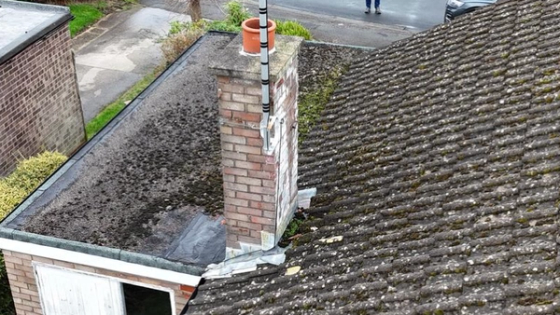
Every one of these is a photograph from a survey we carried out, with the finding it supported. Not a stock library, and not an illustration.
 Chimney Stack Defects
 Roof Covering and Roofline Issues
 Porch Deterioration
 Electricity
 Services
 Roof and Chimney Defects
From enquiry to report, without the chasing.
Tell us the property
Address, type and roughly when you need it. About two minutes.
Get a fixed price in writing
A firm figure within the hour in office hours. Not an estimate, not a range.
Confirm and sign
We send the terms of engagement to review and sign electronically.
We arrange access
We deal directly with the seller, agent or keyholder to book the inspection.
The inspection
A local RICS surveyor attends and inspects the property.
Your report, and answers
You get the report, and anything in it you want explaining, we explain.
Using a Level 2 survey to renegotiate the price
If the survey finds defects while the sale is still subject to contract, the report gives you something specific to take back to the seller: what needs attention, element by element, and how urgently. If you want figures to put in front of the seller, priced repair costings can be added to the instruction. Whether the price moves is a matter between you and the seller.
Questions we get asked.
Will a Level 2 Homebuyers Survey highlight everything wrong with the property?
It reports on what is visible and accessible on the day. Parts of the building that are covered, unsafe or inaccessible are not inspected, because no residential survey opens up the structure, and the report says where that applies. Where the surveyor suspects a hidden problem, the report recommends further investigation before you commit.
How long does a Level 2 Homebuyers Survey take?
A Level 2 inspection typically takes two to four hours, depending on the size, age and complexity of the property.
Can I use the report to renegotiate the price?
Yes. If significant defects are found before contracts are exchanged, your survey can be used to support a fair reduction or request for remedial works. Your legal adviser will guide how to present this formally.
Can I attend the survey inspection?
No. The surveyor needs to work through the property methodically and without interruption, and access is agreed with the seller on that basis, so we do not arrange for clients to attend. Once you have the report, ask us anything it raises and we will answer it.
How is a Level 2 survey different from a mortgage valuation?
A mortgage valuation protects the lender’s interests and only confirms the property’s market value. A Level 2 survey is for you: it assesses the property’s physical condition, identifies defects and says what needs attention.
What if the survey finds major issues?
We’ll clearly explain the implications and outline what should happen next. This may involve obtaining specialist advice or cost estimates before deciding whether to proceed or renegotiate.
Can you estimate repair costs in the report?
Not as standard. A Level 2 rates each element and says what needs attention, but it does not price the work. If you want budget figures for the significant items, ask for repair costings with your quote: they are an optional extra, priced separately. Either way, if anything in the report needs explaining, ask us and we will answer it.
Will you test electrics, heating or plumbing?
No, those are specialist inspections. We observe normal operation where possible and advise if further testing is needed.
Do you provide photos in the report?
Yes. Photographs are included to illustrate key findings and make the report easier to understand.
What happens after I receive the report?
You’ll receive a clear summary, detailed findings and recommendations. If anything in it needs explaining, ask us and we will answer it.
Is a homebuyers survey worth it?
For most purchases of a conventional home, yes: it rates the condition of every main element and tells you what needs attention while you can still renegotiate or walk away. If the property is older, altered or already showing problems, a Level 3 is usually the better choice, and we will say so when you ask for a quote.
Will a homebuyers survey pick up subsidence?
It will normally pick up the visible signs, such as cracking of a particular pattern, doors and windows out of square, or distortion to the brickwork, and the report will say what has been seen and what should happen next. Confirming subsidence, and how far it has gone, is a structural engineer’s job and often needs monitoring over months. A survey tells you whether that step is warranted.
What do surveyors look for in a homebuyers survey?
The building elements in turn: chimneys, roof coverings and rainwater goods, main walls, windows and doors, the roof space where there is safe access, ceilings, floors and internal joinery, the visible parts of the services, and the grounds within the boundary. Each one is rated, and anything that needs work is explained rather than just flagged.
Do I need a homebuyers report or a building survey?
A Level 2 suits a conventional property in reasonable condition. Go to Level 3 where the property is older than about 1900, has been extended or altered, is listed or in a conservation area, or where something is already visibly wrong and you want the cause and the likely cost. Tell us the age, type and anything unusual and we will recommend honestly, including when the cheaper one is the right one.
RICS Home Survey — Level 2 near you.
Every area below is staffed by RICS surveyors who work there. If we cannot cover you properly, this site will say so rather than take the booking.
Our other services.
RICS Home Survey — Level 3
Older, larger, altered or extended, or anything already showing signs of movement or damp
RICS Residential Valuation
You need a figure rather than a condition report, for probate, Help to Buy or shared ownership
Tell us the property. We'll do the rest.
A firm price in writing, a local RICS surveyor within days, and a report you can use.
Get your fixed quote →