
How a Level 3 survey in Stockport found £23,700 to £37,000 of repairs
Older period homes can be full of character, but they often come with hidden repair liabilities that are not always obvious during a viewing. Original materials, historic alterations and long-term weathering can all create issues that only become apparent during a detailed inspection.
The property
The property was a two-storey mid-terraced house, believed to date from around 1900, with accommodation including two reception rooms, three bedrooms, a kitchen, utility room, bathroom and separate WC. The home also had a small front forecourt and enclosed rear garden, together with a rear store. It sat within an established residential area, but also within a Conservation Area, meaning any future repairs or alterations may require more careful planning and heritage-sensitive approaches. Like many homes of this age, it also carried some expected construction considerations, including the potential for older materials and hidden defects, which is exactly where a Level 3 Survey can be especially valuable.
Survey summary
Our overall conclusion was that the property was still a reasonable purchase, but only if the buyer proceeded with a clear understanding of the likely repair burden and associated costs. A number of elements were rated Condition Rating 3, including the chimney stacks, roof coverings, rainwater goods, roof structure, floors, chimney breasts/flues, bathroom fittings and electrics. The report also advised that formal quotations should be obtained before exchange, with estimated repair liabilities in the region of £23,700 to £37,000.
For the buyer, this changed the picture significantly. What may have looked like a well-kept period home externally was, in reality, a property needing careful budgeting and likely price renegotiation.
Estimated cost of the repairs identified: £23,700 to £37,000
Costings are an optional extra on a survey, priced separately. These are budget estimates from the report, not quotations for the work.
Key survey findings
Roof and Chimney Defects
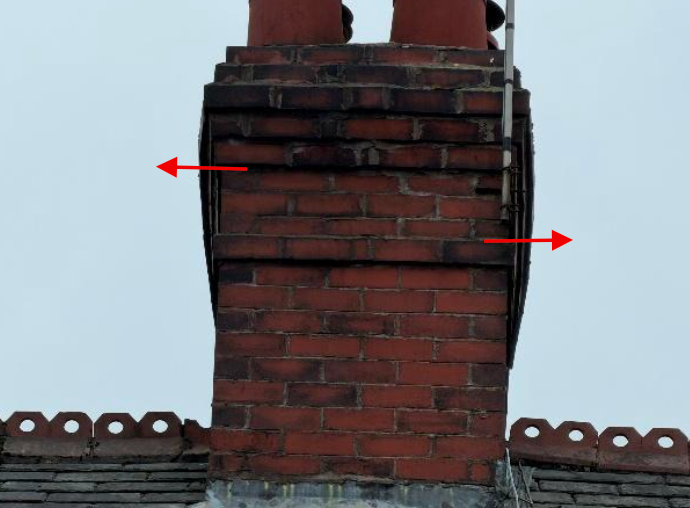
One of the most significant areas of concern involved the roof and chimney structures. The property had two brick chimney stacks, both of which showed deterioration. Defects included loose flaunching, perished mortar, defective flashings, cracked pots and slight bulging to the main stack. Internal damp readings and staining suggested these defects were already allowing moisture into the building.
Main stack slight bulge
The main roof covering also raised concern. The survey found damaged and slipped slates, weathered valley gutter linings, and importantly, no underlay, indicating the roof was likely original. While still serviceable in places, it was clear that major maintenance — and likely future replacement — should be expected. This is the kind of issue many buyers simply would not identify from ground level.
Structural Movement and Wall Repairs
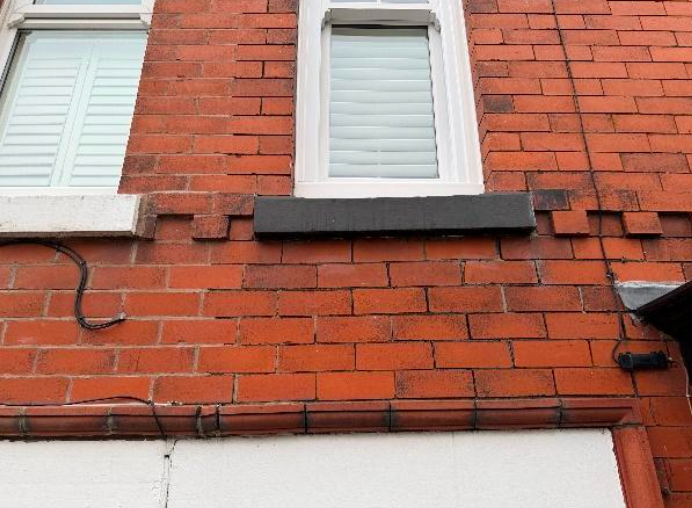
Another important issue related to historic movement. The survey noted that underpinning works had reportedly been carried out in 2016 to the party wall with the adjoining property, and evidence of sagging masonry and hairline cracking remained visible to the front elevation. While this did not necessarily indicate ongoing major structural failure, it did mean the buyer needed to investigate the history properly and obtain all supporting documentation through their legal adviser.
The external walls also showed more routine age-related deterioration, including perished pointing, localised cracking and weathered masonry details. On a period brick property, these kinds of repairs are common, but they are still important because poor pointing and neglected wall finishes can contribute to moisture penetration over time.
Sagging brickwork and stepped cracking noted between the doors / Perished mortar pointing
Damp, Ventilation and Internal Moisture Risks
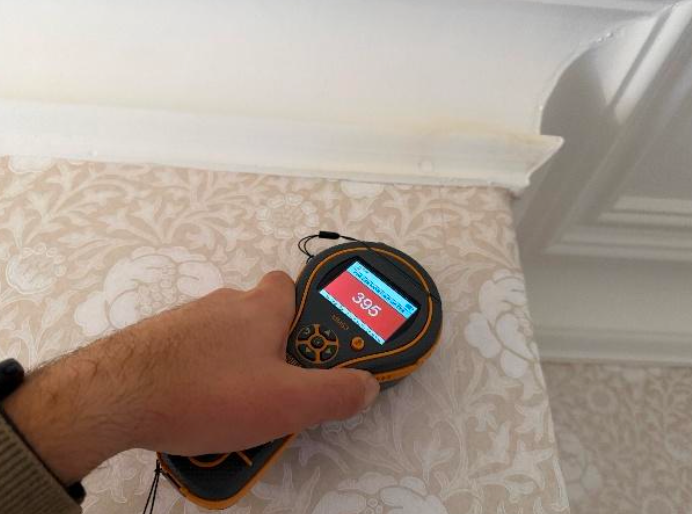
Internally, the survey identified several signs of historic and active moisture-related defects. Staining was found to ceilings and timbers in several locations, particularly around the chimney stacks, roof valleys and beneath the shower room. The roof void also lacked proper ventilation, increasing the risk of condensation and long-term timber deterioration if left unresolved.
The report also highlighted that damp chimney breast plaster may require drying out and possible replacement, while bathroom defects and poor extraction were likely contributing to moisture concerns internally. These are exactly the sorts of interconnected issues a detailed survey helps bring together into one clearer picture.
High readings to chimney breast in middle bedroom
What do these findings mean?
This case study is a strong reminder that older homes can carry multiple overlapping repair risks, even where they remain broadly mortgageable and potentially good purchases. Without a Level 3 Survey, the buyer may not have appreciated the likely scale of roof works, the implications of previous movement, or the extent of internal moisture-related concerns.
Instead, they were able to move forward with a far more informed understanding of the property — and a much stronger basis for negotiation.
Buying in Stockport?
Tell us the property and we will send a fixed price in writing.
Get your fixed quote →Surveys in Stockport →