
Japanese Knotweed
What Japanese knotweed is, how to identify it, the plants it gets confused with, and your options for removal and remediation.

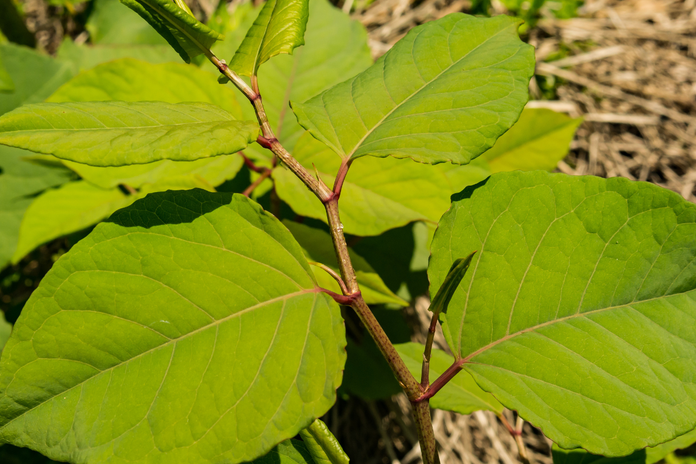
Japanese knotweed, known scientifically as Fallopia japonica or Polygonum cuspidatum, is a herbaceous perennial plant native to East Asia. It was once used for everything from medicine to stabilising streambanks to ornamental planting, but it is now treated as an invasive species. Japanese knotweed can grow quickly and as high as 11 feet, which is why managing its growth and spread matters. This guide covers what it is, how to identify it, the plants it gets confused with, why it worries buyers and lenders, and your options for removal.
What is Japanese knotweed?
Japanese knotweed is a bamboo-like plant that grows rapidly. It was introduced into the UK in the 19th century and was popular with landscapers and gardeners because it forms thick screens. The swift growth of Japanese knotweed quickly became a problem because it started to out-compete native plant species.
More recently, the mention of Japanese knotweed has made buyers and sellers nervous. Before new guidelines were proposed by the Royal Institution of Chartered Surveyors (RICS), sales stalled and were even derailed by the presence of the plant. Lenders have rejected applications for loans on affected properties, and many people are fearful of trying to buy or sell where there is evidence of the plant on the plot.
It is estimated that there are approximately 1.45 million homes in the UK that have Japanese knotweed.
Japanese knotweed identification
The plant looks different through the seasons, which is why Japanese knotweed identification can be tricky. If you know what to look for, the signs are fairly consistent.
What does Japanese knotweed look like through the year?
- Spring: red or purple shoots push up through the ground, a little like asparagus spears. New leaves are rolled up and often red-tinged.
- Summer: the plant is at full height, with green, heart or shield-shaped leaves arranged in a zig-zag along the stem. Stems are hollow and bamboo-like, with purple speckles.
- Late summer and early autumn: clusters of small creamy-white flowers appear.
- Winter: the canes die back to brown, brittle, hollow stems that often stay standing through the colder months.
The leaves tend to grow in a staggered pattern along the stem rather than directly opposite one another. The underground rhizome is the part that drives the spread, and it can extend well beyond the visible growth.
If you spot something that looks like the above, it is worth getting it checked before you panic. Correct identification is the first step, and it is easy to get wrong.
Plants mistaken for Japanese knotweed
Several common plants look like Japanese knotweed and are regularly mistaken for it. Getting this right saves a lot of worry, and in some cases saves an unnecessary treatment bill.
Plants that are commonly confused with it include:
- Bindweed: a climbing plant with similar heart-shaped leaves, but it twines around other plants and has trumpet-shaped flowers.
- Houttuynia: an ornamental ground-cover plant with heart-shaped leaves that can resemble young knotweed.
- Russian vine: a close relative, sometimes called "mile-a-minute", which is a climber rather than an upright cane.
- Lilac and dogwood: young shoots and leaf shapes can look similar at a glance.
- Himalayan honeysuckle: hollow, bamboo-like stems that are easily confused in winter.
If you are unsure, our guide to the plants mistaken for Japanese knotweed goes through the lookalikes in more detail. When in doubt, a photograph sent to a specialist or a surveyor's inspection will settle it.
Why is Japanese knotweed so bad?
There is a risk of property damage linked to Japanese knotweed, but the RICS suggests that many concerns come from fear caused by misinformation. In the worst-case scenario, knotweed can affect:
- drainage systems
- patios, pathways and driveways
- boundary walls
- gardens
- outdoor structures and outbuildings
- conservatories
The RICS states that severe damage is very rare, and in most cases it is possible to prevent further damage through remediation treatment. Seeking expert help can protect properties and prevent buyers and vendors from losing out.
Japanese knotweed removal
Legally speaking, you are not required to remove Japanese knotweed from your land unless it is causing a nuisance. It is worth noting that you can face prosecution if you cause it to spread into the wild.
For small clumps, the task is more manageable. These can often be tackled by the home gardener, either by digging them up or spraying them with a weedkiller. Even so, it is wise to be aware of its reputation for being difficult to eradicate entirely.
If you are dealing with a larger infestation, it is often recommended to hire a professional company. Their expertise helps make sure the plant is properly dealt with and the spread is stopped. Most professional removal falls into two broad approaches:
- Herbicide treatment: applied over several seasons. It is the cheaper option, but it takes time and the rhizome can remain dormant in the soil.
- Excavation and removal: digging out the plant and contaminated soil. It is faster but more expensive, and the material has to be disposed of correctly.
Where a sale is involved, lenders usually want an insurance-backed guarantee attached to the treatment plan. That is the document that reassures them the work will be seen through.
What not to do with Japanese knotweed
There are some actions you should avoid when tackling this weed:
- Do not flail or strim: this can spread fragments of the plant, leading to new growth elsewhere.
- Avoid dumping cuttings: even small pieces of the plant can regenerate if they are discarded inappropriately.
- Resist the urge to compost it: Japanese knotweed will survive most composting processes, potentially contaminating your compost.
- Do not rely solely on manual removal: while you can dig out the plant, its extensive root system means you are likely to miss some fragments, leading to regrowth.
- Be cautious with herbicides: they can be effective, but using them requires careful timing and multiple applications. Always follow label instructions.
- Avoid spreading soil: soil from an infested area can contain rhizomes. Do not move it to unaffected parts of your garden or other locations.
- Do not underestimate its resilience: even if you think you have removed the plant, monitor the area for regrowth and be prepared for long-term management.
Understanding these pitfalls can help you approach Japanese knotweed management more effectively and prevent it from spreading further.
How do RICS guidelines on Japanese knotweed affect buyers and sellers?
In June 2021, the RICS published a consultation on new guidelines to help buyers and provide reassurance for lenders, so that sales of properties affected by Japanese knotweed could proceed. Before the new advice, detection of the plant could delay, disrupt or even stop property sales. Surveys that flag Japanese knotweed can cause panic among buyers and make sellers anxious, causing sales to fall through. The RICS wanted to provide clarity for both buyers and lenders and help reduce the impact of misinformation.
The RICS worked with DEFRA (Department for Environment, Food and Rural Affairs) and the HCLG (Ministry of Housing, Communities and Local Government) Select Committee to create a new framework, which outlines how sales can go ahead without complications in cases where Japanese knotweed is identified.
New guidelines set out a simple, accessible route map for surveyors to follow when providing an initial assessment and advice for mortgage lenders. The framework also provides guidance for a new classification system, which would flag the most severe infestations.
The RICS framework seeks to provide reassurance for lenders and advice for surveyors so that Japanese knotweed does not derail sales or cause major disruptions when identified during a regular valuation.
The author of the guidelines, Philip Santo, said,
"Creating confidence and awareness that knotweed isn't a death sentence for home sales is a key principle behind this guidance: it's certainly not the 'bogey plant' that some make it out to be." "In most instances the weed can be remediated with effective treatment, so it's critical that all those involved in the home buying and selling process have access to unbiased, factual information, that sets out when they need to obtain reputable remediation services."
How does Japanese knotweed affect property value?
Japanese knotweed can affect property values and make homes less appealing to buyers. The extent of any devaluation depends on the scale and severity of the issue. Effective management and remediation by experts can help to rectify problems and prevent further damage. If a surveyor values a property that is affected either indirectly (a neighbouring property has an infestation) or directly, they will take the cost of treatment and repairs into account in the same way as other defects flagged during the survey.
In some cases there may be a Japanese knotweed infestation, but the plant may not have caused damage to the property. Here, the cost of treatment would be the sole issue, and valuers would not have to consider the expense of repairing damaged structures. It is possible that the value of the property would not change as a result of the presence of knotweed that had not caused any damage to the house or garden.
Is it wise to buy a house with Japanese knotweed?
The main aim of the RICS guidance is to give buyers and lenders confidence that sales can go ahead where houses are affected by Japanese knotweed. In the past, values have been reduced and people have been anxious about buying affected homes, often as a result of misinformation. Japanese knotweed can cause damage to properties, particularly outbuildings, drains and external structures, but in most cases expert help can remedy the issue. The guidelines are intended to stop buyers losing out on a home they want because of the presence of the plant.
For buyers who are worried about Japanese knotweed, a survey can give you an idea of the scale and severity of the problem and the likely cost of treatment. Where there are signs of damage, the cost of repairs will need to be taken into account alongside the cost of treatment. Confronting the problem is the best course of action, as some lenders will only approve a mortgage if there is a treatment plan in place.
If you are worried about the presence of Japanese knotweed in a property, a RICS Level 3 survey will help. RICS surveyors are trained to spot signs of Japanese knotweed and other defects, such as damp or asbestos, and can advise accordingly. If you are weighing up which survey to book, our guide on which level of survey you should get sets out when each one is appropriate.
Frequently asked questions
What is Japanese knotweed?
Japanese knotweed is an invasive, bamboo-like perennial plant native to East Asia, known scientifically as Fallopia japonica. It was introduced to the UK in the 19th century and spreads rapidly through an underground root system called a rhizome. It is treated as an invasive species because it out-competes native plants and can be difficult to remove entirely.
What does Japanese knotweed look like?
It changes through the year. In spring it produces red or purple shoots a little like asparagus. In summer it reaches full height with hollow, bamboo-like stems, purple speckles, and green heart or shield-shaped leaves set in a zig-zag along the stem. In late summer it carries clusters of small creamy-white flowers, and in winter the canes die back to brown, hollow stems.
How to identify Japanese knotweed?
Look for the zig-zag leaf pattern, hollow bamboo-like stems and the seasonal changes described above. Several plants, including bindweed, Russian vine and Himalayan honeysuckle, are commonly mistaken for it, so correct identification matters. If you are unsure, send a photograph to a specialist or arrange a surveyor's inspection before assuming the worst.
How to get rid of Japanese knotweed?
Small clumps can sometimes be dug out or treated with weedkiller, but the plant is notoriously persistent. For a larger infestation, or where a sale is involved, it is usually best to use a professional company offering either herbicide treatment over several seasons or full excavation. Lenders generally want an insurance-backed guarantee attached to the treatment plan. Avoid strimming, composting or moving contaminated soil, as this spreads the plant.
More on common defects
Pest Infestations in Buildings: Causes, Signs and Prevention
What a pest infestation does to a building, how to spot one early, and the practical steps that keep rats, insects and birds out.
Read →Types of Damp
An RICS surveyor explains the three types of damp in houses, how to tell them apart, and when the standard remedy is the wrong one.
Read →Asbestos
Asbestos is a naturally-occurring mineral, once hailed for its resistance to heat, electricity, and corrosion. For this reason it was used extensively in building materials, insulation, and various other products.
Read →Need a survey on a specific property?
Tell us the address and we will send a fixed price in writing, with no obligation.
Get your fixed quote →