
Settlement
What settlement is, how settlements differ from subsidence, and how to tell a cosmetic crack from one that needs investigating before you buy.

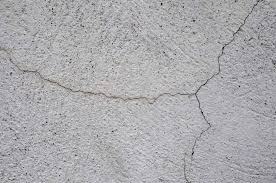
Almost every house moves a little. Most of that movement is settlement, it happens early, it stops, and it does not threaten the building. Settlements are among the most common things a surveyor is asked to explain, and a smaller amount of movement is not settlement at all. The difference decides whether a crack is a decorating job or a reason to renegotiate. This guide is about telling the two apart before you commit to a purchase.
What is settlement in a building?
Settlement is the ground beneath a building compressing under the weight of the building itself. Every foundation loads the soil below it, the soil consolidates slightly under that load, and the structure comes down with it by a small amount. It is expected behaviour, foundations in modern UK construction are designed with it in mind, and plaster and timber are able to flex as it happens.
The word does extra duty in civil engineering, where it describes soil behaviour in general terms. For a homebuyer the useful meaning is narrower: the initial, self-limiting movement a building makes as it beds into its ground, usually in the first few years after it is built or after significant structural work. When people ask what is a settlement in the context of a house, that early bedding-in is what they are describing.
Settlement and subsidence are not the same thing
This is the distinction that matters most and it is the one most often blurred. Building settlement is the ground compressing under the load of the building. Subsidence is the ground moving away beneath the building for a reason that has nothing to do with its weight, such as clay shrinking in a dry summer, a leaking drain washing fines out of the soil, or historic mine workings below.
Three practical differences follow from that:
- Settlement is usually early and self-limiting. Subsidence can begin at any age and may continue.
- Settlement is generally uniform, the whole building easing down together. Subsidence is usually differential, one part moving more than another, which is why it tears the structure.
- Settlement rarely needs structural work. Subsidence often needs the cause identified and removed, and sometimes underpinning.
Heave is the third member of the set and the mirror of subsidence: ground swelling upwards, most often clay recovering moisture after a tree has been removed. If you are trying to place a crack, the question is not only how bad it looks but what the ground is doing and why.
Where the evidence points away from normal settlement, our guide to subsidence covers diagnosis, the insurance position and what remedial work involves.
What do settlement cracks look like?
Typical settlement cracking is fine, often under a millimetre wide, and appears where materials are weakest rather than where the structure is most stressed. Internal plaster, the junction between an extension and the original building, and the corners of window and door openings are the usual places. The cracks tend to be stable: they appear, they stop, and they do not reopen after they are filled.
Common cosmetic signs include:
- Fine hairline cracks in plaster, generally less than 1mm wide.
- Slight gaps opening between skirting boards and the floor.
- Small separations at window or door frames.
- A hairline crack tracing the join where an extension meets the original wall.
None of these is a reason on its own to walk away from a house. They are the sort of thing routine decoration deals with, and on a survey they would usually be recorded as requiring no repair.
When should a crack worry you?
The features that move a crack out of the cosmetic category are width, direction, location and whether it is changing. Any of the following justifies further investigation rather than filler:
- Cracks wider than about 5mm, or cracks that are visibly widening over time.
- A stepped pattern running diagonally through brickwork, following the mortar joints.
- Cracking that passes through both the inside and the outside of the same wall.
- Doors and windows that have begun to stick or sit out of square.
- Cracks that are wider at the top than the bottom, or the reverse, rather than parallel-sided.
- A property on clay-rich ground with mature trees close to the building.
Width alone is not a diagnosis. A wide crack in a rendered wall may be the render failing rather than the structure moving, and a narrow crack that is opening month by month tells you more than a wider one that has not changed in twenty years.
How long does a house take to settle?
Most initial settlement happens in the first few years after construction and the majority of it in the first eighteen months, as the ground consolidates under a load it has not carried before. The same applies after a significant alteration: a new extension, a removed chimney breast or a widened opening changes how load reaches the ground, and a period of small adjustment follows.
A house that is still producing new cracks a decade after it was built is not settling in the normal sense, and that is worth saying plainly. Movement continuing well beyond the expected period is the point at which a surveyor stops calling it settlement.
Settlement in new build homes
New builds are where settlement is most expected and most often misread. Hairline cracking in plasterboard joints, small gaps at skirtings and doors needing easing in the first year or two are ordinary, and most warranty providers treat cosmetic shrinkage and settlement cracking as a decorating matter rather than a defect.
Two things are worth separating. Drying shrinkage, as plaster, screed and timber lose their construction moisture, produces fine cracking that has nothing to do with the ground at all. Settlement proper is the ground consolidating. Both are normal in a new house, but only one of them involves the foundations, and a snagging inspection should say which it is looking at.
Settlement in period homes and extensions
Older buildings are not exempt, but their movement history is longer and mostly finished. Victorian and Edwardian houses commonly show fine cracking accumulated over decades, generally stable and often already filled once or twice. Timber-framed buildings move seasonally as the frame takes up and gives off moisture, which opens and closes small gaps rather than tearing anything.
Extensions are the most common source of genuine new movement in an old house. A modern extension on modern foundations, joined to a building on shallow Victorian ones, will settle at a different rate to what it is attached to. Cracking at that junction is expected and is usually accommodated with a movement joint; cracking that runs away from the junction into the original structure is a different conversation.
What causes settlement?
The common causes are ordinary and mostly benign:
- Compression of the soil under the weight of the building, the primary cause.
- Shrinkage of building materials as construction moisture dries out.
- Seasonal change in the moisture content of the ground.
- Alterations that change how load is carried down to the foundations.
What separates these from the causes of subsidence is that none of them removes support from beneath the building. Compression is the ground yielding under load and then stabilising. Subsidence is support being taken away, and it does not stabilise until the cause is dealt with.
How a surveyor tells settlement from subsidence
On an inspection the judgement rests on pattern rather than on any single crack. A surveyor will look at where the cracking sits in the building, its direction and width along its length, whether it appears on both faces of a wall, and whether doors, windows and floors have gone out of true with it. The age and construction of the building, and what is known about the ground beneath it, frame all of that.
The practical questions are:
- Is the pattern consistent with the whole building easing down, or with one part moving relative to another?
- Does the age of the building match the movement, or is it moving long after it should have stopped?
- Is there an external cause nearby, such as mature trees, a drain run or made ground?
- Is there evidence the movement is historic and stable, such as old filled cracks that have not reopened?
A Level 2 Homebuyers Survey will record cracking, rate it and say whether it needs further investigation. Where movement is significant, or the building is older, altered or unusual, a Level 3 Building Survey traces the defect to its cause and sets out the options, which is the report to commission when the question is why the building is moving rather than whether it is.
What to do if you see cracks before you buy
If a property you are buying shows movement, the sequence that helps is:
- Photograph and measure the cracks, noting the date, so that any change has a baseline.
- Ask the seller and the estate agent directly whether there is a history of movement, repair or an insurance claim.
- Check whether recent structural work, an extension or tree removal coincides with the cracking.
- Commission a survey at the level the building warrants before exchange rather than after.
A crack recorded once tells you its width. The same crack recorded twice, months apart, tells you whether it is active, and that is the more useful piece of information. Where a surveyor cannot settle the question from a single visit, monitoring over a period is a legitimate recommendation rather than an evasion.
If movement changes the picture, our guide to the red flags you might miss on a viewing sets out what else to watch for before you commit.
Frequently asked questions
What is a settlement and how does it differ from subsidence?
A settlement is the ground compressing under the weight of a building and the structure easing down with it, usually early in the building's life and self-limiting. Subsidence is the ground moving away beneath the building for a reason unrelated to its weight, such as clay shrinkage or a leaking drain, and it can begin at any age and continue until the cause is removed.
Are settlement cracks covered by insurance?
Generally not. Buildings insurance responds to subsidence, heave and landslip as named perils, usually with a substantial excess. Normal settlement is treated as an expected characteristic of the building rather than damage, and cosmetic cracking is a maintenance matter. If a policy does respond, it is because the movement has been diagnosed as something other than settlement.
Do settlement cracks need repairing?
Cosmetic cracks need filling and redecorating, no more, and the sensible time to do it is once the movement has stopped. Filling a crack that is still active simply means filling it again. Where a crack passes through masonry rather than plaster, the repair should follow a diagnosis rather than precede it.
Will settlement stop me getting a mortgage?
Normal settlement recorded as cosmetic rarely troubles a lender. A valuer who sees evidence of structural movement may retain funds pending a structural engineer's report, and that is a question about the diagnosis rather than about cracking as such. The practical risk is not the crack; it is an unresolved question about the crack at the point of valuation.
Can settlement turn into subsidence?
Not directly, because they have different causes. A building can experience both, and a house that settled normally when it was built can be affected by subsidence decades later if the ground conditions change. The presence of historic settlement cracking neither causes nor rules out subsidence, which is why the diagnosis is made on the current pattern rather than on the building's history alone.
Which survey level should I choose if a house has cracks?
For a conventional house in reasonable condition with fine cracking, a Level 2 will record and rate it. If the cracking is significant, the building is older, altered or unusual, or you already suspect movement, a Level 3 is the appropriate level, because it is the one that investigates cause and consequence rather than recording condition.
More on common defects
Japanese Knotweed
What Japanese knotweed is, how to identify it, the plants it gets confused with, and your options for removal and remediation.
Read →Pest Infestations in Buildings: Causes, Signs and Prevention
What a pest infestation does to a building, how to spot one early, and the practical steps that keep rats, insects and birds out.
Read →Types of Damp
An RICS surveyor explains the three types of damp in houses, how to tell them apart, and when the standard remedy is the wrong one.
Read →Need a survey on a specific property?
Tell us the address and we will send a fixed price in writing, with no obligation.
Get your fixed quote →