
Staircasing Shared Ownership: How the Valuation Sets the Price of Your Next Share
How the price of a further share in a shared ownership home is worked out: today's value not the original price, old and 2021 model leases, 1% staircasing, why the landlord needs a RICS valuation, improvements and disrepair left out, final staircasing, and what you can do if the valuation looks high.

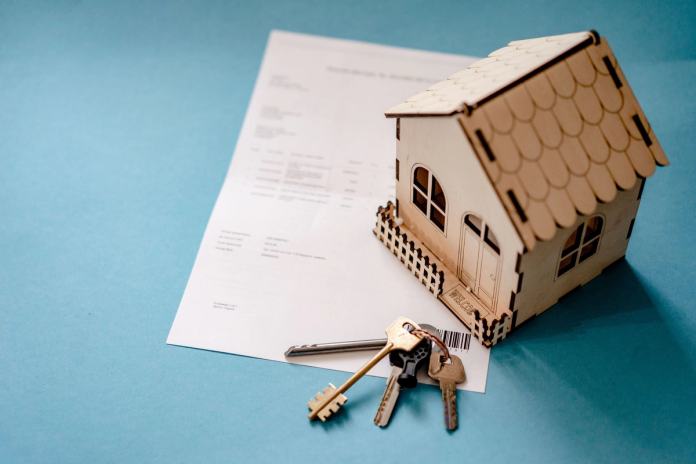
Staircasing is how a shared owner buys more of their home, step by step, until they own it outright if they choose to. Each step needs a price, and for most steps that price comes from a RICS valuation of the whole home. Get the valuation right and you pay a fair price for your next share. Get it wrong, or leave it to chance, and you can end up paying for value you added yourself.
This guide explains how the price of a further share is worked out, what changed with the 2021 model lease, why your landlord insists on a RICS valuation and how long it lasts, what the valuer leaves out, and what you can do if the figure looks high. It covers homes in England funded through Homes England's programmes, which is most shared ownership outside London. Your lease always has the final word, so keep it to hand.
How the price of your next share is worked out
You pay the percentage you are buying, applied to the full market value of the home at the time you buy. Not the price you first paid, and not the price of your original share. That is why the valuation matters so much: it sets the figure every percentage is taken from.
An illustration, not a real case:
| Step | Figure |
|---|---|
| Bought in 2019 for | £180,000, with a 40% share costing £72,000 |
| Valued today at | £220,000 |
| Buying a further 25% costs | £55,000 (25% of £220,000) |
| Share owned afterwards | 65% |
| Rent then paid on | 35% instead of 60% |
| Buying the final 35% later, at the same value | £77,000 |
Two things follow. If prices in your area have risen since you bought, every further share costs more than your first one did, percentage for percentage. If they have fallen, it costs less. And because the rent is charged on the share you do not own, each step brings the rent down, which is often the real reason people staircase.
On top of the share price there are usually other costs: the valuation fee, an administration fee set by your landlord, your own solicitor, sometimes your lender's fees, and stamp duty once your share goes above 80% (unless you paid stamp duty on the full value when you first bought). GOV.UK's shared ownership guidance sets out the landlord's fee, and your conveyancer will tell you whether stamp duty applies.
Which lease do you have?
Shared ownership changed in April 2021. Homes funded through Homes England's 2021 to 2026 programme are sold on a new model lease, and the rules for staircasing are different. Your Key Information Document, which you should have been given when you bought, says which one applies. If you cannot find it, ask your landlord.
| Point | Older leases (most homes sold before April 2021) | 2021 model lease |
|---|---|---|
| Smallest first share | Usually 25% | 10% |
| Smallest further share with a valuation | Usually 10% (some older leases 25%) | 5% |
| 1% a year option | No | Yes, for the first 15 years |
| Repairs in the early years | Your responsibility | Landlord helps with essential repairs for 10 years |
| Landlord's time to find a buyer when you sell | Usually 8 weeks | 4 weeks |
The lease always decides. A few landlords offered the 2021 terms on homes completed just after April 2021 from the older programme, so the date alone does not settle it.
The 1% option on newer leases
If your home is on the 2021 model lease, you can buy 1% a year for the first 15 years without a RICS valuation. The price is worked out from the original value of your home, moved up or down each year in line with the HM Land Registry House Price Index. Your landlord gives you that index-based figure at least once a year, or when you ask to buy a 1% share.
The rules are tight:
- It is 1% or a full staircasing step of 5% or more. You cannot buy 2%, 3% or 4%.
- An unused year cannot be rolled over, so you cannot save up three years and buy 3%.
- The landlord cannot charge an administration fee for a 1% purchase.
- If either you or the landlord disputes the index figure, a RICS valuation can be used instead.
An index measures average prices across an area, not your home. If your type of home has done better than the average, the 1% price may be a bargain. If it has done worse, perhaps a flat in a block with cladding questions, the index can overstate its value, and a RICS valuation for a larger step may give a fairer price. Our sold prices tool shows what homes near you have actually sold for, which is a quick way to see whether your area has kept pace with the index.
Why your landlord needs a RICS valuation
For any step of 5% or more (10% on most older leases), Homes England requires the price to be set by a RICS Registered Valuer. The aim is a fair price in both directions: the landlord is selling equity that was partly paid for with public grant, and the money goes back into building more affordable homes.
The rules on who can do it are strict:
- The valuer must be registered with RICS for valuation and work to the RICS valuation standards, known as the Red Book.
- The valuer must be independent of both your landlord and you.
- An estate agent's appraisal or your lender's mortgage valuation is not a substitute.
Who books it depends on your lease and your landlord's policy. Some landlords instruct the valuer themselves, some give you a panel to choose from, and some let you pick any suitable RICS valuer. Under the current model leases, the shared owner pays for the staircasing valuation. Check your landlord's process before you book, because a valuation instructed the wrong way may not be accepted. Our shared ownership valuation page explains how we take instructions where your landlord lets you arrange it.
What the valuer actually values
The figure is the Market Value of the whole home, as defined in your lease. In plain terms, the price it would fetch on the open market from a willing buyer, assuming the buyer gets 100% of it with vacant possession. For a house that becomes freehold when you own 100%, the valuer values the freehold. For a flat, which stays leasehold, the valuer values the lease with the term it has left, which matters if your flat is on an older lease that is getting shorter. Our lease extension calculator gives a rough idea of how the remaining term affects a flat.
Two parts of the lease definition work in your favour and your landlord's.
Your improvements are left out. If you have improved the home with your landlord's permission, the valuer values it as if the work had not been done. You paid for the work once, and the rule stops you paying for it again through the share price. The value an improvement adds is often different from what it cost, which is why the valuer looks at value, not receipts.
Disrepair is left out too. If repairs the lease makes your responsibility have been put off, the valuer values the home as if they had been done. That protects the landlord, so neglect cannot be used to push the price down.
Where either applies, Homes England expects the valuer to be told at the start and to report two figures, one as the home is and one on the lease's basis, so everyone can see the adjustment.
The line between an improvement and a repair is a judgement, but the principle is that an improvement adds value, while replacing something worn out does not. Some examples, which are typical rather than fixed:
| Usually treated as an improvement | Usually treated as repair or replacement |
|---|---|
| An extension, conservatory or loft conversion | A new boiler replacing a failed one |
| An added en suite or downstairs WC | Redecoration and new carpets |
| A kitchen or bathroom refitted to a clearly higher standard | A like-for-like replacement of a worn kitchen |
| Driveway parking where there was none | Fixing a leaking roof or a broken fence |
One catch: GOV.UK says the unimproved value applies where you had written permission for the work. Without permission, the price may be based on the value including the improvement, which is likely to cost you more. If you did work without asking, talk to your landlord before the valuation, not after.
Chris Bloor, on siteThe valuer's figure can be final, so I treat the days before the visit as the moment that matters. More than once I've met an owner on the doorstep with a folder of receipts and the landlord's written consent ready, and that is exactly the time to hand it over. After the report lands, there is often nowhere left to go. Show the original brochure for how the place was when you bought it. Point out what you added yourself. Flag anything a buyer would price in, cladding, a short lease, a service charge row. Evidence shapes the number while there's still room to shape it.
Getting ready for the inspection
A little preparation helps the valuer get the basis right first time.
- List your improvements, with dates, receipts and your landlord's written consent for each one.
- Find the original specification. The developer's sales brochure or the plans from when you bought show what the home was like before your work, which is exactly what the valuer has to picture.
- Have certificates to hand: building regulations sign-off for an extension or loft conversion, and guarantees for anything structural.
- Tell the valuer about anything a buyer would price in, such as cladding or fire safety work on your block, a service charge dispute, or a lease with a short term left.
- Send any sales you think are relevant, before the visit. A completed sale of a similar home is evidence. An asking price or an online estimate is not.
How long the valuation lasts
A staircasing valuation is normally valid for three months from the date of the report. Homes England expects most staircasing to complete inside that window. Where delays are outside your control, such as legal delays, your landlord can extend it by a further three months, and by another three if everyone agrees. Beyond that, a new valuation is usually needed.
The three months start when the report is dated, not when you are ready. Most delays come from the mortgage, so it is worth speaking to a broker or your lender before you book the valuation. The valuation also does not commit you to a particular percentage. Within its validity you can usually choose how much to buy, as long as it meets your lease's minimum.
Final staircasing: buying the last share
Staircasing to 100% is called final staircasing, and it changes more than the rent.
- The rent stops, because there is no longer a share you do not own.
- For a house, the landlord normally transfers the freehold to you.
- For a flat, you keep the lease and the landlord keeps the freehold of the block, so service charges carry on.
- The landlord's right to find your buyer ends. Older leases sometimes also gave the landlord a right to buy the home back after you reached 100%. Homes England dropped that requirement in 2015, and your solicitor can ask for it to be removed.
A few homes cannot reach 100%. In some small rural settlements, known as Designated Protected Areas, the lease may stop you at 80%, or require you to sell back to the landlord if you go above it. Older persons shared ownership is usually capped at 75%. Your lease will say if either applies, and the valuer should be told, because a cap can affect the figure.
If the valuation looks high
This is where expectations most often go wrong. Many shared ownership leases say the valuer's decision is final and binding. Homes England's guidance confirms that, in those cases, there is no route to challenge a staircasing valuation or ask for a new one, provided it was carried out on the correct basis. The same rule stops your landlord asking for a revaluation because it thinks the figure is too low.
That leaves four things worth doing.
- Send your evidence before the valuation. Homes England is clear that comparable sales can be given to the valuer before the valuation, not afterwards to challenge it. Our guide to comparable evidence explains what valuers look for.
- Check the basis, not the number. Were your improvements left out? Was the right tenure valued, freehold for a house, leasehold with the correct term for a flat? Are the floor area and the number of bedrooms right? A valuation on the wrong basis can be redone, and where the error came from the landlord's information, Homes England says you should not pay for the new one.
- Point out factual errors. If the report gets a fact wrong, tell the valuer through whoever instructed them. Correcting a fact is different from arguing about the opinion.
- Remember you do not have to buy. Staircasing is your choice. If the price does not work for you, you can let the valuation lapse and try again when the market or your finances have moved, or use the 1% route if your lease has it.
Some older leases refer disputes to the District Valuer. If yours does, your solicitor can explain how that works.
Chris Bloor, on siteMarket Value is the whole of it, which trips people up. You might own 40% and want another 25%, but the valuer puts a figure on the entire home, then the maths takes 25% of that. Rising prices since you bought mean each step costs more than the last. I've stood in flats where the owner assumed they'd pay roughly what they did first time round, and the number had moved on without them. So before you book anything, look at what homes like yours have actually sold for nearby. That tells you whether the figure coming back is in the right area.
Frequently asked questions
Can I use my mortgage lender's valuation for staircasing?
Usually not. A mortgage valuation is prepared for the lender, often on a different basis, and it does not leave out your improvements. Your landlord needs a RICS valuation prepared on the lease's terms. The two are compared in our guide to mortgage valuations and surveys.
Does the price I originally paid make any difference?
Not for a staircasing step of 5% or more, which is priced from today's value. It matters only for the 1% option on newer leases, where the original value is the starting point for the index.
Will the home's condition lower the price of my share?
Normally not. The home is valued as if it were in the repair the lease requires, so repairs you have put off do not reduce the price. Equally, improvements you made with permission do not raise it.
Is a staircasing valuation the same as a survey?
No. The valuer inspects the home to value it, not to report on its condition. If you want to know about defects before committing more money, that needs a survey, and our guide on whether you need a valuation or a survey explains the difference.
A fair price for your next share
The price of your next share rests on one figure, so it pays to get the basis right before the valuer arrives: improvements listed, consent letters found, evidence sent. If your landlord lets you arrange the valuation, our staircasing valuation service is carried out by a local RICS Registered Valuer to your landlord's requirements. You can get a fixed price before you decide, and our guide to RICS valuations explains the standards every valuation is prepared to.
More on advice
Rebuild Cost of a House: How It Is Worked Out and Why It Is Not the Market Value
What the rebuild cost of a house is, why it can be higher or lower than the market value, what goes into the figure, how to measure your home for the free BCIS calculator, and when a surveyor's assessment is worth paying for.
ReadHouse Valuation for Divorce: How the Family Home Is Valued
How the family home is valued in a divorce or separation in England and Wales: agreed figures, agent appraisals and RICS valuations, the Single Joint Expert, what the valuer actually values, and what to do if you disagree with the figure.
ReadWhat Does a Capital Gains Tax Valuation Involve?
What a Capital Gains Tax valuation is, when HMRC expects one, and what an RICS surveyor assesses to establish market value at a given date.
ReadNeed a survey on a specific property?
Tell us the address and we will send a fixed price in writing, with no obligation.
Get your fixed quote