
Why Would a Mortgage be Declined After a Valuation?
A mortgage declined after valuation usually points to the property, not your finances. Here is why it happens and what to do next.
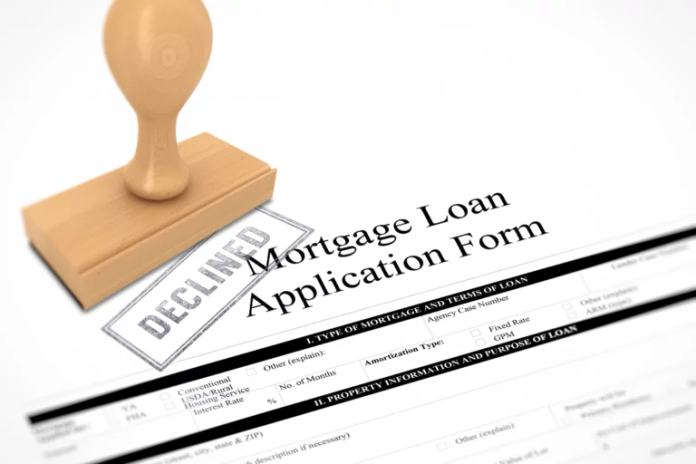
The UK housing market has faced lots of challenges in recent years, particularly when it comes to securing a mortgage. As the Bank of England raised interest rates, mortgage rates also grew and many lenders withdrew their five-year mortgage products. Fortunately, lenders are starting to reintroduce longer mortgages again, however many still find it challenging to secure a mortgage. There are many reasons why a mortgage would be declined, and this can happen before and after a property valuation. A mortgage declined after valuation usually tells a different story from one declined at application: it points to the property, not your paperwork. These are detailed below, including what you can do when it happens to you.
Why would a mortgage be declined?
Securing a mortgage is an integral step in buying a home. Unfortunately, not every mortgage application is approved, and this can happen for a variety of reasons. Some of the leading reasons why mortgages are declined are related to the financial circumstances of the individual or parties applying for the mortgage.
These include the following:
1. Poor or limited credit history
One of the most common reasons for a declined mortgage is the applicant’s credit history. Missed payments, defaulted loans, or bankruptcy can negatively impact an applicant’s credit score. A low credit score might indicate to lenders that there’s a high risk of the borrower defaulting on the loan.
Having no or very little credit history can be just as detrimental as having poor credit. Without a proven track record, lenders can’t gauge how responsible an applicant is with credit.
2. Insufficient income
Mortgage lenders want to ensure that borrowers can afford the monthly mortgage payments. Particularly in the current climate whereby inflated mortgage rates have made it difficult for homeowners and landlords to be able to make repayments. So when applying for a mortgage, if the applicant’s income is deemed too low or unstable, it may lead to a declined application.
3. High debt-to-income ratio (DTI)
This ratio compares a mortgage applicant’s monthly debt payments to their gross monthly income. A high DTI can signal that an applicant is ‘overleveraged’ and may struggle to handle additional debt. This is generally considered unfavourable in mortgage applications and could be a reason why a mortgage is declined.
4. Inadequate employment history
Generally, mortgage lenders consider consistent employment as synonymous with stability. If you’ve changed jobs a lot of times, have gaps in your employment history, or even have just a short work history in your current job, lenders might deem you as higher risk.
5. Deposit is too small
The more equity a borrower has in a property from the outset, the less risk the lender assumes. If the down payment is too small, it may result in a declined application.
6. Interest rate and loan type
The type of mortgage and the interest rate can also play a role. For instance, someone who might qualify for a fixed-rate mortgage might not qualify for an adjustable-rate mortgage due to the potential for the monthly payment to increase in the future.
These reasons are all possible reasons why a mortgage application might be denied when you first come to apply. However, they are generally related to your financial situation, such as size of deposit or downpayment or credit history. They’re also a reflection of borrowing limits, which is something we’ve seen recently in the mortgage lender chaos that ensured. However, when a mortgage is declined after a valuation, this suggests other issues might be happening.
Why is a mortgage declined after a property or home valuation?
When a mortgage is declined following a property valuation, it usually suggests that there are issues related to the property itself. Property or home valuations are a huge part of the mortgage approval process, as they determine the estimated market value. This then influences a lender’s decision to grant or decline a mortgage.
A property valuation takes into account multiple aspects of the property alongside the current market. You can read more about the ins and outs of a RICS property valuation to get more of an insight as to what they involve. They’re critical as, when carried out by a RICS surveyor, they are impartial and accurate.
If the property is valued incorrectly, this may affect the status of a mortgage application, and ultimately lead to it being declined. Overvaluation, for instance, can make a property seem more expensive than its real worth, which might make it difficult for borrowers to sell or refinance later on, thereby raising the chances of foreclosure. On the other hand, an undervalued property might prevent homeowners from accessing the equity they’ve built over time, limiting their financial flexibility in terms of selling or drawing from home equity loans.
Additionally, beyond the borrower’s financial capacities, certain issues intrinsic to the property, such as structural defects or legal encumbrances, can impact its perceived value, further complicating the mortgage approval. Therefore, when faced with a declined mortgage post-valuation, it’s important not to rush into reapplying. It’s usually more beneficial to first pinpoint and understand the root cause, and then consult with experts before applying again. A home survey from an independent assessor can help here.
The down valuation: the most common cause
When people search for a mortgage refused after valuation or a mortgage rejected after valuation, a down valuation is usually what has happened. The lender's surveyor has valued the property below the price you agreed with the seller. The lender then lends against the lower figure, not the price, so the loan no longer covers what you need.
This is not the same as a mortgage declined after survey. A mortgage valuation is a brief check for the lender's own purposes, not a condition report on the house. It is worth understanding the difference between a survey and a mortgage valuation so you know what each one is actually telling you.
Property defects and construction type
Sometimes the issue is not the figure but the building. If the valuer flags something that makes the property hard to lend on, the application can stall or fail. Common examples include:
- Non-standard construction, such as certain concrete or steel-framed houses.
- Signs of structural movement, subsidence or significant cracking.
- Spray foam insulation in the roof, which several lenders now treat with caution.
- Japanese knotweed within influencing distance of the building.
- Short leases, which can fall below a lender's minimum term.
Where a valuer raises a concern like this, a lender will often ask for a specialist report before deciding. That is where an independent RICS home survey earns its keep: it tells you how serious the issue really is, rather than leaving you guessing.
Does the lender matter: Nationwide, NatWest, Halifax and Precise
The mechanics are much the same whichever lender you use. All of them run a valuation before they release funds, and all of them can decline on the back of it.
A Nationwide mortgage declined after valuation, a NatWest mortgage declined after valuation, or a Halifax mortgage declined after valuation will almost always come down to the same two things: the property valued lower than the agreed price, or the valuer flagged a defect or a construction type the lender is not comfortable with.
A Precise Mortgages declined after valuation can feel different because Precise is a specialist lender often used for more complex cases, but the trigger is the same. The valuation either did not support the loan, or the property raised a risk the lender would not take on.
Knowing which of the two it is matters, because the fix is different. A down valuation is about the number. A defect is about the building. You cannot sensibly respond until you know which one you are dealing with.
What to do if your mortgage is declined following a property valuation
It’s not easy when your mortgage application is declined, especially when it happens after a property valuation and therefore might be outside of your control. However, these are the best steps to take if you do find yourself in this situation.
1. Seek expert advisory
Whether facing a decline or looking for alternatives, specialised advisors are really useful. They offer tailored solutions, from appealing the decision to strategising renegotiations or suggesting prospective lenders aligned with your property type and financial stance.
2. Leveraging independent RICS Surveyors
RICS-accredited surveyors provide unbiased property assessments, often delving deeper than standard valuation reports. Using their services can preempt potential issues, making your mortgage application more robust. Find out more about the difference between a survey and a valuation here to better understand the process.
3. Exploring multiple financial strategies
When confronted with down valuations, you could consider these options to help your application:
- Pay the difference: Bridging the gap between the valuation and purchase price.
- Increase the initial deposit: Offering a larger upfront sum can make the mortgage application more appealing to lenders.
- Renegotiation: Adjusting the property’s price with the seller based on the valuation report.
Ultimately, there are different reasons as to why a mortgage would be declined after a valuation. Discrepancies in property valuations can lead to lenders being wary of granting a mortgage, such as over or undervaluation, which may result in a house being perceived as more valuable than its actual worth, and other underlying issues such as structural defects or legal encumbrances. Seeking advice from reputable and trustworthy professionals in property valuations can help ease your mind that you’re gaining an accurate property valuation to support your mortgage application.
Frequently asked questions
Why would a mortgage be declined after a valuation when it was agreed in principle?
An agreement in principle is based on your finances, before anyone has looked at the property. The valuation is the lender's check on the house itself. If the property values below the agreed price, or the valuer flags a defect or a construction type the lender avoids, the offer can still be declined even though your finances have not changed.
Is a mortgage declined after valuation the same as one declined after survey?
Not quite. A mortgage valuation is a short check carried out for the lender. A survey is a separate, more detailed inspection you commission for yourself. A decline usually follows the lender's valuation. A survey you have paid for does not go to the lender, but what it finds can explain why the valuation came back as it did.
Can I challenge a down valuation?
You can ask the lender to review it, but you will need evidence. Comparable sold prices for similar properties nearby are the strongest argument. If the valuer missed something or used weak comparables, a reasoned case supported by evidence sometimes leads to a revised figure. There is no guarantee, so it is worth preparing properly before you appeal.
Will the same thing happen with a different lender?
It can. If the property valued low or has a defect, another lender's valuer may reach the same conclusion. Specialist lenders are sometimes more flexible on construction type or condition, but you should expect them to price that risk in. Fixing or understanding the underlying issue first is usually more productive than simply reapplying elsewhere.
Should I still get my own survey if the lender has valued the property?
Yes. The lender's valuation protects the lender, not you. An independent RICS home survey tells you the real condition of the property and the repairs you are taking on. If a valuation has been declined over a defect, a survey is often the quickest way to find out how serious it really is.
More on news
Should I Invest in Buy-to-Let Property in 2023?
The allure of the property market has consistently drawn the attention of investors. But as 2023 unfolds, those pondering the buy-to-let sector are seeking clarity.
Read →What Changes Will Be Made in the New Renters’ Reform Bill 2023?
The new Renters’ Reform Bill represents a significant overhaul of the private rented sector (PRS) in England, marking 2023 see the most substantial changes in 30 years.
Read →The Housing Reform 2026 — What Are the Key Changes?
The UK’s housing market is facing one of its most significant overhauls in decades.
Read →Need a survey on a specific property?
Tell us the address and we will send a fixed price in writing, with no obligation.
Get your fixed quote →