
Chimney Stack Repair: A Buyer's Guide to Faults and Costs
What chimney stack repair involves, from the faults a survey flags to repointing, partial and full rebuilds, with indicative cost ranges and what a RICS survey picks up before you buy.

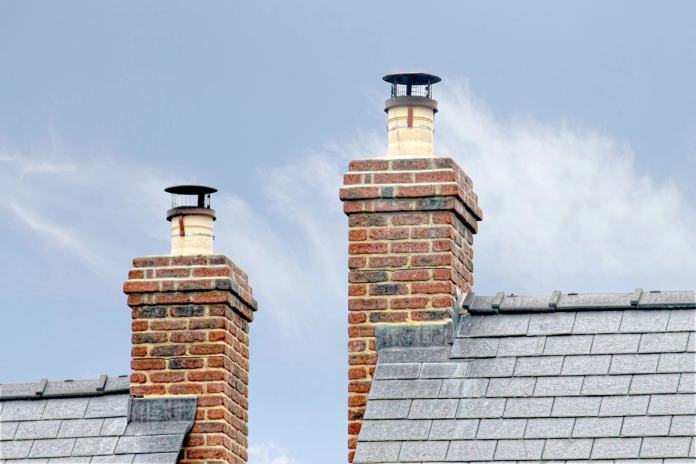
What chimney stack repair involves
Chimney stack repair covers any work to make the brickwork, mortar and weatherproofing above the roofline sound again. The stack is one of the most exposed parts of a house. It takes wind and rain from every side, and the flue gases work on the mortar from the inside. It is no surprise that it is one of the defects our surveys flag most often.
Most of the time the problem is not the whole stack. It is a specific fault: tired pointing, a leaning section, or flashing that has lifted. The right fix depends on which of those you are dealing with, and how far it has gone.
Before you can price a repair, you need to know what is actually wrong. That is where a survey earns its keep.
The faults a survey flags
Cracked or missing pointing
Mortar joints break down faster at height than anywhere else on the house. Once the pointing is open, water gets behind the brick face and the problem accelerates. On a survey this often appears as the earliest, cheapest thing to catch.
Spalled brickwork
When water soaks into brick and then freezes, the face blows off. This is spalling. A few spalled bricks can be cut out and replaced. Widespread spalling points to a longer-standing damp problem and usually means a bigger repair.
Failed flashing
Flashing is the lead or metal that seals the joint between the stack and the roof. When it lifts, cracks or was never dressed in properly, water runs straight into the roof space. We often trace a damp patch on a bedroom ceiling back to failed flashing rather than the stack itself.
A leaning stack
A stack that leans is the one to take seriously. It is usually caused by sulphate attack on the mortar, where flue gases and damp break down the joints on one side so the stack pulls over. A leaning stack can be a safety issue and often needs a partial or full rebuild.
Chris Bloor, on siteA leaning stack is the one that stops me on a roof. On a Victorian terrace last year the stack had pulled over on the flue side, and you could see daylight in the open joints from the garden. That is sulphate attack, mortar breaking down from the inside, and it does not reverse. The lean tends to be worse than it looks from the ground, so I want it viewed close up before anyone talks about cost. Patch it and you are rebuilding it properly within a year or two.
Repair options, from repointing to rebuild
Think of the options as a ladder. You go up it only as far as the fault requires.
| Repair | When it suits | Scale |
|---|---|---|
| Repointing | Sound brick, tired joints | Smallest |
| Replace flashing | Leaks at roof junction | Small |
| Cut out spalled brick | Localised damage | Moderate |
| Partial rebuild | Top courses decayed | Larger |
| Full rebuild | Leaning or widely failed | Largest |
Repointing rakes out the old mortar and refills the joints. It is the cheapest option and the right one when the brick is still sound.
Flashing renewal strips the old lead and dresses in new, properly lapped into the brickwork. This is the fix when the stack is fine but the junction leaks.
Partial rebuild takes the stack down to a sound level, usually below the worst of the decay, and rebuilds the top courses. A new flaunching and pots go on at the same time.
Full rebuild is for a stack that is leaning, badly spalled throughout or structurally unsafe. The stack comes down to the roofline and is rebuilt from there. Where a chimney is redundant, some owners choose to remove it below the roofline instead, which is a different piece of work: see Chimney Breast Removal for what that involves inside.
Chimney stack repair cost and what moves it
We will not quote a fixed figure, because the price swings so much with the job. What we can do is set out the factors that decide it.
- The scale of the fix. Repointing sits at the low end. A full rebuild sits at the top, often several times the cost.
- Access. A stack on a low bungalow is far cheaper to reach than one on a three-storey terrace. Access often costs more than the brickwork.
- Scaffolding. Most stack work needs a scaffold or a tower. For a tall or awkward stack a steeplejack may be needed. This is a real line in the budget, not an afterthought.
- Materials. Matching old brick and using a lime mortar on a period property costs more than modern equivalents.
- Listing and conservation. A listed building or a conservation area can require like-for-like materials and consent, which adds time and cost.
If you want to check whether the property is listed or in a conservation area before you plan work, this tool will tell you.
The honest point on chimney stack repair cost is this: get the fault diagnosed first. Paying for repointing when the stack actually needs a rebuild is money lost, and the problem comes straight back.
Why this is rarely a DIY job
Stack work is at height, on a roof, often over a public path or a neighbour's garden. The combination of access, scaffolding and working with lead and mortar at the top of a building puts it beyond safe DIY for most people.
A competent roofer handles repointing, flashing and most partial rebuilds. A leaning or structurally failed stack is one for a specialist, and we would want it looked at properly before anyone starts. The brickwork above the roofline is also linked to the roof covering below it, so the two are often inspected together: our guide to pitched roof coverings covers that side.
What a RICS survey identifies before you buy
This is where a buyer gets the most value. A survey tells you the stack is a problem before you own it, while you can still do something about the price.
On inspection we look at the stack from ground level and from any safe vantage point, often with binoculars and, where appropriate, a drone. We note the state of the pointing, any spalling, the condition of the flashing, whether the stack is plumb, and the state of the flaunching and pots. Each item gets a condition rating so you can see what is urgent and what is not.
Chris Bloor, on siteBinoculars do a lot of the work here. From the garden, or a back bedroom window, I can read the pointing, check whether the flaunching has cracked round the pots, and see if the flashing is sitting flat or lifting. What I note on a survey is the condition of each of those, with a rating, so you can tell the urgent from the cosmetic. A drone goes up where the angle from the ground hides the far face. None of it is the same as standing on the roof, so anything that looks marginal I say should be viewed close up before you commit.
For most houses in reasonable order, a Level 2 survey picks up stack defects perfectly well. For an older property, or one where the stack already looks to be leaning or heavily decayed, a Level 3 survey gives a fuller account of the cause and the likely repair. If you are not sure which you need, this helps.
Either way, a clear report lets you budget, instruct the right trade, or renegotiate the offer with evidence behind you.
Frequently asked questions
How to repair a chimney stack?
Start by diagnosing the fault. Tired joints need repointing, a leaking roof junction needs new flashing, blown bricks need cutting out and replacing, and a leaning or badly decayed stack needs a partial or full rebuild. Match the fix to the fault rather than doing more than needed.
Because the work is at height and usually needs scaffolding, it is a job for a roofer or, for a structural rebuild, a specialist. We would recommend getting the fault assessed before any work starts.
How much does chimney stack repair cost?
It depends mostly on the scale of the work and the access. Repointing and flashing are at the lower end. A partial or full rebuild costs considerably more, and scaffolding adds a real amount on top. Period materials, a tall stack or a listed building all push the figure up.
How do I know if my chimney stack needs a full rebuild?
The clearest sign is a lean, which usually points to mortar breakdown on one side. Widespread spalling, open joints throughout, a failed flaunching and loose pots together also point to a rebuild rather than patch repairs. A RICS surveyor can tell you which category the stack falls into.
Can a chimney stack be left if we do not use the fireplace?
A redundant stack still needs to be weathertight and structurally sound, because a failing one lets water into the roof and can become unsafe. If you never intend to use it, removal below the roofline is an option, but that is a separate job with its own implications inside the house.
More on common defects
Chimney Breast Removal: What Buyers and Surveyors Check
What chimney breast removal involves, why the stack above needs support, the correct process, costs, and what to check if a home already has one removed.
Read →Plants Mistaken for Japanese Knotweed
Several common garden plants look like Japanese knotweed but are harmless. Here is how to tell the difference, and when to get a specialist to be sure.
Read →Dampness Survey Cost: What You Pay and What You Get
What a dampness survey typically costs, what drives the fee, what it should include, and when a damp investigation is worth commissioning.
Read →Need a survey on a specific property?
Tell us the address and we will send a fixed price in writing, with no obligation.
Get your fixed quote →