
Damp Proof Course: Types, Costs and Regulations
What a damp proof course is, the main types including injected systems, realistic costs and the regulations that apply.

What a damp proof course is
A damp proof course (often shortened to DPC) is a continuous barrier built into a wall near ground level. Its job is to stop moisture in the ground rising up through the masonry by capillary action. That upward movement of water is what we call rising damp.
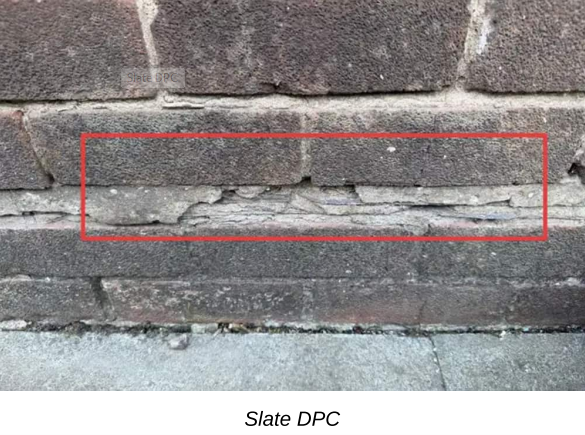
In older homes the course might be slate, engineering brick or bitumen felt laid in the mortar bed, typically about 150mm above external ground level. In modern homes it is usually a plastic membrane. You will also find a damp proof membrane in the floor, which does the same job horizontally and should link to the DPC in the walls.
When the course works, the wall above it stays dry. When it is missing, bridged or has broken down, damp can track upwards and you see the classic signs: a tide mark on internal plaster, salt deposits, flaking paint and a musty smell low down on the wall.
Chris Bloor, on siteStand in a hallway with a tide mark on the plaster and the eye goes straight to the course. Most of the time I find the wall already has one. On a Victorian terrace last year the slate course was sound, but the drive had been laid over it, so water was tracking in above the barrier. Lower the ground, not inject the wall. Before anyone drills holes, look at what has changed outside the house. The signs inside rarely tell you the cause on their own.
Is the damp proof course really the problem?
This is the part that gets missed. Rising damp is real, but it is diagnosed far more often than it occurs. Before anyone injects a wall, the cause of the dampness needs to be established.
We commonly find the damp has a simpler source:
- External ground or a path raised above the DPC, so water bridges it.
- A render coat or pointing carried down over the course.
- A leaking gutter, downpipe or gully soaking the wall.
- Penetrating damp through solid walls, or condensation from poor ventilation.
All of those mimic rising damp and none of them is cured by a new DPC. If a contractor offers a free survey and then quotes to inject the wall, treat that with caution: the person diagnosing the problem is also the person selling the cure. A dampness investigation by someone with no stake in the treatment is money well spent. We cover what that involves in our guide to dampness survey cost, and the wider picture in types of damp.
The main types of damp proof course
Physical barriers in new build
In new construction the DPC is built in as the wall goes up: a plastic membrane in the mortar bed, lapped and linked to the floor membrane. This is the most reliable form because it is continuous and installed from the start.
Injected (chemical) damp proof course
An injected damp proof course is the usual retrofit for an older wall. Holes are drilled into the mortar bed at regular spacing and a water-repellent cream or fluid is injected. The chemical spreads through the mortar and forms a water-resistant band that resists capillary rise.
It is appropriate where genuine rising damp has been confirmed and the original DPC has failed or is absent. It works best in reasonably sound masonry. It is less reliable in rubble-filled walls, very thick solid walls or stone where the injection cannot spread evenly.
Other methods
Older or specialist approaches include porous tubes, electro-osmotic systems and physically inserting a new membrane by cutting into the mortar course. Physical insertion is effective but disruptive and costly. For most situations an injected system is the default where treatment is genuinely needed.
Cost of a damp proof course
It is difficult to give a single figure because the cost of a damp proof course depends on the wall, not just the room. The honest answer is that quotes vary a great deal, so get more than one and make sure they are pricing the same work.
The main things that drive damp proof course costs:
- The length of wall treated, measured in linear metres.
- Whether one face or both faces of the wall need work.
- Access: ground floor is straightforward, a cellar or a wall hard against a boundary is not.
- Hacking off and replastering salt-contaminated plaster.
- Making good: skirtings, decoration and sometimes flooring.
That last group is the sting. The injection itself is often the cheaper part. The replastering, drying out and redecoration usually cost more, and the wall can take months to dry before you decorate. When you compare a cheap quote against an expensive one, check whether replastering and making good are included or priced separately.
Chris Bloor, on siteThe cheap quote and the dear one often aren't the same job. One firm will price the injection and little else. Another will price hacking off the old plaster, replastering, the drying time and the decoration on top. On paper the first looks half the money. It isn't. I've seen buyers budget for the drilling and forget the wall has to dry for months before anyone paints it. Ask each firm to write down what's in and what's left out. Then you're comparing like for like, not a bare price against a finished room.
Damp proof course regulations and standards
There is no single "damp proof course law" you can point to, but several things apply.
New building work must meet the Building Regulations, which require walls and floors to resist moisture from the ground. A new DPC and floor membrane are part of meeting that requirement. For a straightforward retrofit injection in an existing home, Building Regulations approval is not usually needed, though associated work such as structural alterations or a new floor slab can bring it into scope.
Beyond that, the industry works to published standards. The Property Care Association sets standards and training for damp and timber treatment, and reputable contractors hold membership and offer insurance-backed guarantees. A guarantee is only worth having if the firm is likely to still be trading, and if the work was the right treatment in the first place.
If the property is listed or in a conservation area, be careful. Injected systems and cement replastering can trap moisture in solid traditional walls that were designed to breathe, and can do more harm than good. Listed building consent may be needed for the work. You can check status with our listed building checker.
A survey will set out the condition rating and whether further investigation is recommended. If damp shows up in a report and you want to understand the severity, our guide to RICS condition ratings explains what the numbers mean.
Frequently asked questions
What is a damp proof course?
A damp proof course is a barrier built into a wall near ground level that stops moisture in the ground rising up through the masonry. It is made from slate, bitumen felt, engineering brick or, in modern homes, a plastic membrane. When it works, the wall above stays dry.
How much is damp proofing course?
The cost depends on the length of wall treated, access and how much replastering and making good is needed. The injection is often the smaller part of the bill: replastering and redecoration usually cost more. Get more than one quote and check they price the same work.
How much is a damp proof course?
There is no single figure. A short run of wall in an accessible ground-floor room is at the lower end, while a long wall, a cellar, both faces treated and full replastering sit much higher. Always ask whether the quote includes making good.
How much for a damp proof course?
Ask each contractor to quote per linear metre and to list what is included: injection, hacking off old plaster, replastering, drying time and decoration. That lets you compare like for like rather than comparing a bare injection price against a full job.
Do I always need to inject the wall?
No. Many cases diagnosed as rising damp turn out to be bridging, a leak, penetrating damp or condensation, and injection will not fix those. Get an independent diagnosis before you accept any treatment quote.
More on common defects
Chimney Stack Repair: A Buyer's Guide to Faults and Costs
What chimney stack repair involves, from the faults a survey flags to repointing, partial and full rebuilds, with indicative cost ranges and what a RICS survey picks up before you buy.
Read →Chimney Breast Removal: What Buyers and Surveyors Check
What chimney breast removal involves, why the stack above needs support, the correct process, costs, and what to check if a home already has one removed.
Read →Plants Mistaken for Japanese Knotweed
Several common garden plants look like Japanese knotweed but are harmless. Here is how to tell the difference, and when to get a specialist to be sure.
Read →Need a survey on a specific property?
Tell us the address and we will send a fixed price in writing, with no obligation.
Get your fixed quote →