
Wet Rot and Dry Rot: Signs and Treatment
Most rot found in houses is wet rot, and most wet rot is a localised, repairable problem. How to tell wet rot from dry rot, what dry rot treatment involves, and whether to buy.

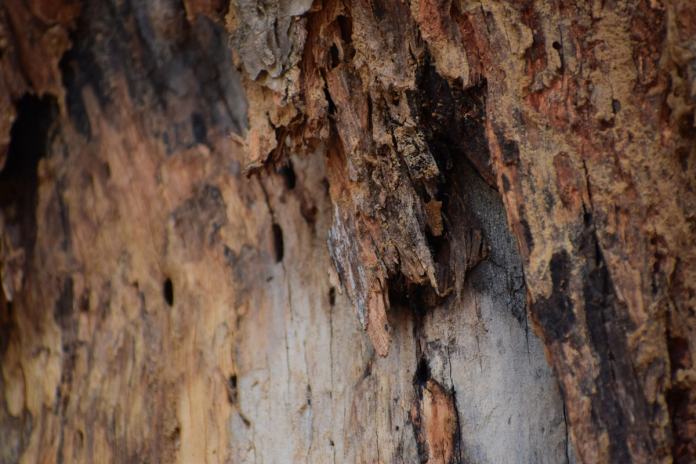
Dry rot is the phrase in a survey report that alarms buyers most, and the one the treatment industry has made the most money frightening people with. Most rot found in houses is wet rot, most wet rot is a localised and repairable problem, and even true dry rot is treatable once you understand what actually drives it. This page explains both, how a surveyor tells them apart, and what dry rot treatment actually involves if you find either in a house you own or want to buy.
What is the difference between wet rot and dry rot?
Both are fungal decay of timber that has been allowed to get and stay damp. The difference is behaviour. Wet rot stays where the moisture is: it needs persistently wet timber, and when the leak stops, it stops. Dry rot is the one species capable of growing beyond the original damp area, spreading across masonry and behind plaster in search of more timber to feed on.
That single difference drives everything else: wet rot is far more common and generally the lesser problem; dry rot is rarer but demands a fuller investigation, because the visible damage may not be the full extent. One thing holds for both: treatment starts with finding and fixing the source of moisture.
What is dry rot?
Dry rot is decay caused by one specific fungus, Serpula lacrymans. Airborne spores are present almost everywhere and are harmless until they land on timber that is damp, typically at a moisture content above about 20 per cent, in still, unventilated air. The spores germinate into fine grey strands called hyphae, the strands mass into a cotton-wool-like growth called mycelium, and in established outbreaks the fungus produces a rusty-orange fruiting body that sheds fine brick-red spore dust.
The name misleads. Dry rot does not grow in dry timber; it needs moisture like any other fungus. It earned the name because the timber it leaves behind is dry, brittle and crumbly, and because its strands can carry moisture with them, letting the outbreak advance into timber that was merely slightly damp. It is that ability, and not any supernatural appetite, that makes it the more serious of the two.
What is wet rot?
Wet rot is the collective name for the other timber-decay fungi found in buildings, the most common being the cellar fungus, Coniophora puteana. These fungi need timber that is properly wet, sustained by an active source: a leaking gutter, a failed seal around a bath, rising moisture at the base of a door frame, a subfloor with blocked vents.
Because it depends on continuous wetting, wet rot remains local to its source. You find it in the skirting behind the downpipe, the joist ends built into a damp wall, the window sill where the paint failed, the floor beneath a slow plumbing leak. It can still do structural damage if the wet timber happens to be a joist or a lintel bearing load, so localised does not mean trivial. It does mean the problem has a defined edge, which dry rot does not promise.
How does a surveyor tell them apart?
A viewing cannot reliably distinguish them; an inspection can, using a handful of practical checks.
- The relationship to moisture. Wet rot sits at the wet spot and fades with distance from it. Decay found beyond the damp area, or growth crossing masonry, points to dry rot.
- The cracking pattern. Dry rot produces deep cuboidal cracking, splitting the wood into rough cubes across the grain. Wet rot cracking tends to follow the grain, and the timber often darkens, or with some species bleaches, rather than crumbling.
- The growth itself. White or grey cotton-wool mycelium, grey strands running over brickwork, or a rust-orange fruiting body all indicate dry rot. Wet rot fungi produce thinner, darker growth that stays on the wood.
- Probing. A surveyor probes suspect timber with a spike. Wet rot commonly leaves a soft, spongy surface, sometimes behind an intact paint film. Dry rot timber is dry and breaks up cleanly.
- Moisture readings. Meter readings across the surrounding walls and timbers map how far the moisture, and therefore the risk, extends. We record those readings in our reports.
Laboratory identification is possible from a sample, but in practice the pattern of decay, growth and moisture answers the question in almost every case.
What are the signs of dry rot?
- A distinctive smell: damp, earthy and mushroom-like, often the first clue in a house that otherwise looks fine.
- Timber that is dark, brittle and cracked into cube-like sections across the grain.
- Skirtings, floorboards or joinery that sound hollow or give way under light pressure.
- White or grey growth resembling cotton wool in still, humid spaces such as subfloors and cellars.
- Grey strands running across masonry, behind plaster or through wall junctions.
- A rusty-orange, pancake-like fruiting body, and a film of fine brick-red dust on nearby surfaces. By the time you see these, the outbreak is established.
What are the signs of wet rot?
- Timber that feels soft or spongy when pressed, classically at window sills, door frames and skirtings.
- Wood noticeably darker than its surroundings, or bleached in patches, with cracking along the grain.
- Paint that looks intact but flexes over decayed wood beneath; the paint film often outlives the timber.
- A damp, musty smell in the affected corner rather than through the room.
- An obvious moisture source nearby: a leaking gutter or downpipe, failed sealant, a bridged damp-proof course, an appliance leak.
- Springy or dipping floorboards near external walls, which can indicate decay at the joist ends.
What causes rot in houses?
Moisture, always. Timber kept below about 20 per cent moisture content does not decay, however old it is; there is sound dry timber in this country’s houses that predates the Tudors. Rot appears when building defects hold water against wood, and the usual suspects are familiar:
- Leaking or blocked gutters and downpipes soaking a wall for years.
- Roof defects letting water into concealed timber.
- Blocked or covered subfloor air bricks, stopping the ventilation a suspended timber floor depends on.
- Ground levels raised above the damp-proof course, wetting joist ends and wall plates.
- Plumbing leaks, especially slow ones inside boxed-in pipework.
- Condensation in unventilated roof spaces and cellars.
This is why rot is best understood as a symptom of a damp problem rather than a disease in its own right. Find the water and you have found the rot’s cause, and usually its cure.
How serious is dry rot?
Serious enough to act on promptly, and considerably less apocalyptic than its reputation. An established outbreak can decay structural timber over a wide area, and putting that right in a bad case can involve opening up walls and floors and renewing joists, which is disruptive and costly. Dry rot in a survey report is never a finding to shrug at.
But it is a treatable defect, not a death sentence for a building. The fungus is entirely dependent on moisture; deprive it of water and it dies. The older practice of burning off plaster and drenching whole buildings in chemicals has given way to a more measured approach: cure the moisture, remove what is actually decayed, and protect what remains while it dries. A property with a properly resolved outbreak, documented and guaranteed, need not be avoided. Anyone using the words “dry rot” to rush you into a same-week treatment contract is selling, not advising.
What does dry rot treatment actually involve?
The sequence matters more than the products, and dry rot treatments and treatment for wet rot follow the same order.
- Find and fix the moisture source. The gutter, the ground level, the vent, the leak. Until this is done, nothing else holds.
- Establish the extent. Lift boards and open up as needed to find the edge of the decay, particularly with dry rot, where growth can run concealed behind plaster.
- Remove decayed timber with a sensible margin, and cut back to sound wood. With wet rot this is often a single sill, frame or board end; with dry rot it can be more.
- Treat and reinstate. Replacement timber is pre-treated, retained timber at the margins may be treated in place, and with dry rot, affected masonry may be treated as a belt-and-braces measure while the wall dries.
- Restore the conditions that keep timber dry: ventilation to subfloors and roof spaces, clear air bricks, maintained rainwater goods.
The treatment of dry rot stands or falls on the first step. Modern chemical treatments for dry rot are a supporting measure, not the cure: if the timber stays wet, the fungus returns whatever has been sprayed on it.
We quote no prices here, because the honest range runs from a modest joinery repair to a substantial building contract depending on extent, and any figure given sight unseen would be a guess. Be careful with free surveys from companies that sell the treatment; a diagnosis from someone paid by the remedy is not independent advice. An independent report first, priced work second, is the right order.
Can you buy a house with rot?
Often, yes, on the right terms. Wet rot in a sill or a floor end is among the most common findings in older houses and is routinely repaired without drama; on its own it is a negotiating point, not a reason to withdraw. Dry rot needs more care, and the questions that decide it are the same ones we ask of subsidence: is the extent known, is the cause identified and fixed, is the outbreak active or historic, and is there documentation and a guarantee for any past treatment?
Where the extent is unknown, the answer is not to walk away; it is to find out before exchange, while the cost still belongs to the negotiation rather than to you.
What does a survey find that a viewing misses?
Rot lives precisely where viewings do not go: subfloor voids, roof spaces, cellars, behind furniture against a cold wall, under the sealed lid of fresh paint. A viewing sees the room; a survey inspects the building.
A Level 2 Homebuyers Survey inspects the accessible roof space and floors, takes moisture readings, rates the affected elements and tells you what needs investigating further. A Level 3 Building Survey goes further into cause and remedy: where the moisture is coming from, how far the decay is likely to extend, and what the repair should involve, which is the information a renegotiation stands on. Just as importantly, a surveyor reports the conditions for rot before there is any rot to see: the blocked air bricks, the raised ground levels, the reading that should not be there. That is the cheapest rot repair available, the one you never need.
If you are unsure which level suits the property, the tool below gives a straight recommendation.
If you are buying a property and want the timber looked at properly, tell us the address and we will send a firm price in writing within the hour, during office hours.
Frequently asked questions
Does dry rot spread through brick?
It grows across and through masonry, but it does not feed on it. The strands travel over brickwork and through mortar joints and wall cavities to reach new timber, which is why establishing the edge of an outbreak matters so much. The masonry itself is not decayed and does not need replacing; it needs to dry.
What does dry rot smell like?
Damp, earthy and mushroomy, similar to walking into a forest after rain. A persistent fungal smell in a house with no visible growth is worth taking seriously, because scent often precedes sight; the growth may be in a subfloor or behind plaster.
Is dry rot dangerous to your health?
The fungus itself is not toxic to people, and it does not attack anything but wood. Heavy concentrations of spores can aggravate asthma and allergies in some people, and the damp conditions that allow rot to grow carry their own well-documented health risks. The main danger dry rot poses is to the building.
Is rot covered by home insurance?
Usually not. Buildings policies generally exclude rot as gradual deterioration, which is a maintenance matter rather than an insured event. Some policies respond where rot results directly from something that was insured, such as an escape of water, so a claim can be worth checking, but no one should buy a property assuming insurance will pay for rot.
Can wet rot turn into dry rot?
No. They are different fungi, and one does not become the other. The confusion arises because both start in the same conditions, so timber that is wet enough for wet rot is also an invitation for dry rot spores. Fixing the moisture removes the audience for both.
How fast does dry rot spread?
In sustained damp and still air, an outbreak can extend noticeably within months, which is why it should be dealt with promptly rather than watched. But growth stops when the moisture stops, and claims of overnight destruction are sales patter, not building science.
Will a mortgage lender lend on a house with rot?
Usually yes, though where a valuer notes significant rot the lender may make a retention or require a specialist report and repairs as a condition. A survey that establishes the extent and cost early keeps you ahead of that conversation instead of hostage to it.
More on common defects
Pitched Roof Coverings
Common Defects on Pitched Roof Coverings Pitched roofs are a defining feature of UK homes, offering charm and robust protection against the elements.
Read →Flat Roofs
A plain guide to flat roofs on UK homes: the materials, the common defects, when repair is enough and when a flat roof replacement is due.
Read →Subsidence
Recognising subsidence: the word every buyer dreads. What it actually is, how to tell it from settlement, and what happens next if a survey finds it.
Read →Need a survey on a specific property?
Tell us the address and we will send a fixed price in writing, with no obligation.
Get your fixed quote →