
The Legal Process of Buying a House: A Plain-English Guide
A plain-English guide to the legal process of buying a house, including buying and selling at once, choosing a solicitor, and new build pitfalls.

7 minute read
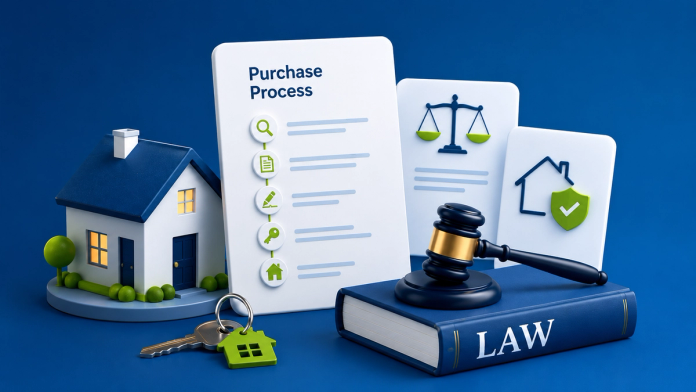
Buying a home is the largest purchase most people ever make, yet the legal side can feel like a black box. What is your solicitor actually doing for all those weeks? This guide walks through the legal process of buying a house in plain English, including what changes when you are selling at the same time, and the traps to watch for with a new build.
The legal transfer of a property from one owner to another is called conveyancing. It is handled by a solicitor or licensed conveyancer, and it runs alongside the survey and mortgage stages of your purchase. A good understanding of how it fits together helps you keep things moving and spot problems early. For a useful consumer overview, the HomeOwners Alliance is a sensible starting point.
What actually happens between offer and keys
Once your offer is accepted, the legal process begins in earnest. The seller's solicitor sends a contract pack and property information forms. Your solicitor then carries out local authority and other searches, raises enquiries about anything unclear, and checks the title and your mortgage offer. You will be asked for proof of identity and proof of funds early on, so it helps to have these ready.
When everyone is satisfied, you reach exchange of contracts. This is the point at which the sale becomes legally binding and a completion date is fixed. Until exchange, either side can usually walk away. Completion is the day the money moves, the keys are released and the property becomes yours. From accepted offer to completion typically takes somewhere in the region of eight to sixteen weeks, though a chain or a slow search can extend that.
What this means for you: nothing is binding until exchange of contracts. A survey, a mortgage offer or an agreed price can all still change before that point. This is exactly why the survey stage matters: it is your window to renegotiate or withdraw before you are committed.
The legal process of buying a house when you are also selling
If you need to sell your current home to fund the next one, you are buying and selling at the same time, and you are almost certainly in a property chain. A chain is a sequence of linked transactions where each purchase depends on the sale beneath it. If one link falls through before exchange, the whole chain can be affected.
The aim is usually to line up both transactions so that you exchange and complete on the same dates for your sale and your purchase. Your solicitor coordinates this so that the money released from your sale flows straight into your purchase. It takes careful timing, and it is one of the main reasons chains move at the pace of their slowest member.
1. Should you use the same solicitor for both?
In most cases, yes. Using one solicitor for your sale and your purchase is common, usually more efficient and often cheaper than instructing two firms. One person holds the full picture, coordinates the two sets of dates and chases the funds through. The main thing to check is that the firm is comfortable handling linked transactions and is responsive, because communication is what keeps a chain alive.
2. When two solicitors might make sense
Occasionally the sale and purchase are very different in nature, for example a straightforward flat sale alongside a complex purchase, and you may prefer specialist advice on one side. This is the exception rather than the rule. For most ordinary moves, one capable firm handling both is the simpler path.
3. Keeping the chain moving
Return paperwork promptly, respond to enquiries quickly and stay in touch with your estate agent. Most delays come from waiting on a single party, so being the proactive link genuinely helps. Many solicitors now use online portals, which makes signing and tracking easier.
"The mistake I see most often is people leaving the survey until late in the process, when everyone's keen to exchange. Get it done early. If we find something that matters, you've still got room to renegotiate or walk away while it costs you nothing. Once you've exchanged, that option's gone."
Chris Bloor MRICS, CJ Bloor
Not sure whether to survey before you commit?
A survey gives you the facts before exchange, while you can still act on them. Tell us about the property and we will recommend the right level, honestly.
What is different about a new build?
New build conveyancing follows the same broad path, but with extra layers. Your solicitor is not just checking your individual plot. They must investigate the planning permissions, deeds and arrangements for the whole development, including who will eventually adopt the roads and sewers. They will also check that your deposit is protected, that there is a warranty in place such as an NHBC policy, and that the contract sets a long stop date by which the home must be finished.
There is also a timing quirk. Developers often want you to exchange quickly, sometimes within a tight deadline of around 28 days, even when the property is still being built. That pressure is normal in new build sales, but it should never push you into skipping proper checks.
What if the developer wants you to use their solicitor?
Many developers will recommend, or strongly encourage, a particular conveyancing firm, sometimes with an incentive attached. You are never obliged to accept. The law does not allow a developer to force you to use a specific solicitor, and the choice is always yours.
The reason for caution is a potential conflict of interest. A firm that relies on a developer for repeat work has a commercial reason to keep transactions moving at the developer's pace, which may sit awkwardly with giving you fully independent scrutiny. An independent solicitor acts solely for you, is less exposed to that pressure, and is free to take the time your due diligence needs. The HomeOwners Alliance guidance on developer solicitors makes the same point: choose a conveyancer experienced in new builds, but not tied to your developer.
The practical downsides buyers report when using a developer's recommended firm tend to be less independent advice, pressure to exchange before issues are resolved, and sometimes higher fees that effectively cover a referral arrangement. None of this means such firms act improperly. It simply means the safest position is a solicitor whose only client is you.
Where a survey fits in
The legal process confirms what you are buying and that you can own it cleanly. It does not tell you about the condition of the building. That is the job of a survey, and the two run in parallel before exchange. For most conventional homes, a RICS Home Survey Level 2 is the right level. For older, larger or significantly altered properties, a RICS Home Survey Level 3 gives a more thorough investigation.
A survey uses a condition rating scale of CR1, CR2 and CR3. CR1 means no repair is currently needed, CR2 means a defect that is not serious or urgent, and CR3 means a defect that is serious or needs urgent attention. Knowing this before exchange gives you room to renegotiate, plan repairs, or in rare cases withdraw, all while the transaction is still flexible. New build buyers sometimes assume a survey is unnecessary, but a snagging inspection and, where appropriate, a professional survey can still flag issues worth raising with the developer.
The short version
The legal process of buying a house runs from accepted offer through searches and enquiries to exchange, when it becomes binding, and then completion. If you are selling too, you are likely in a chain, and using one solicitor for both sides is usually simplest. For a new build, choose your own independent solicitor rather than the developer's recommendation, and never let a tight deadline rush you past proper checks. A survey runs alongside all of this and tells you about the building's condition before you are committed.
More on rics home surveys
Risks of Buying a House Without a Survey
Buying without a survey might seem like a way to save money, but it can leave you exposed to significant costs and problems you had no way of seeing coming.
Read →Survey vs Mortgage Valuation: What's the Difference?
A mortgage valuation and a property survey are not the same thing. Here's what each covers, who it protects, and what buyers need to know before committing.
Read →New Build Snagging Survey: What It Is and What to Do Instead Before You Buy
A new build snagging survey checks a newly completed home for defects before or after you move in. Here’s what it covers, what it typically finds, and what independent survey option makes more sense if you’re buying.
Read →Need a survey on a specific property?
Tell us the address and we will send a fixed price in writing, with no obligation.
Get your fixed quote →